


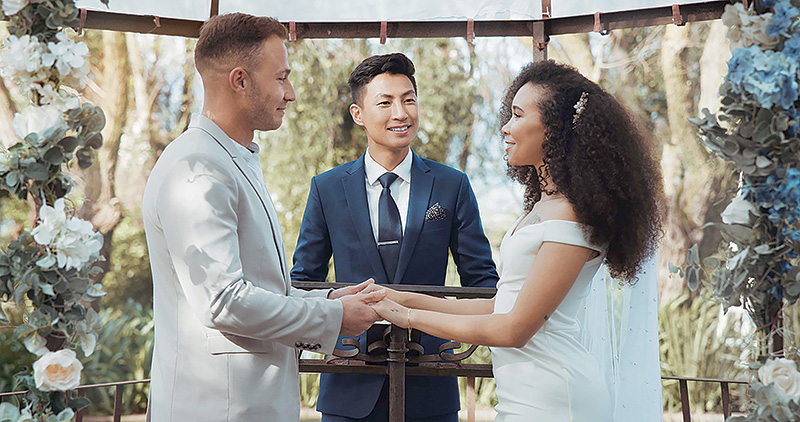
 CHARLOTTE — Imagine this: you – a Catholic lay person – get a call from a relative or a close friend who wants to get married on the beach at the Outer Banks, and they ask if you would officiate at their wedding. They’re not particularly religious, but they love and respect you and would like you to do the honors.
You can even get “ordained” to do it, they suggest, by getting a certificate from an online “church” or other groups that have sprung up in recent years for this purpose.
There are three simple words you should remember: Just say no.
A variety of organizations offer online “ordinations” to anyone who fills out a registration form to officiate a wedding. According to figures compiled by the University of California, the Universal Life Church has ordained more than 20 million people globally, while American Marriage Ministries has ordained more than 1.7 million people. The trend has grown as more people opt for non-church weddings or choose to host destination weddings in exotic places, where they aren’t connected to any particular church or clergy.
It is important that you respectfully and politely decline such a request, Catholic leaders say, because the Church teaches that only validly ordained clergy who have received the sacrament of holy orders may officiate at a marriage ceremony.
Participating in this trend would put a lay Catholic at odds with Church law, says Father John Putnam, judicial vicar for the Diocese of Charlotte and pastor of St. Mark Parish in Huntersville. As judicial vicar, Father
Putnam is the diocese’s chief judge and handles the local Church’s legal affairs, such as marriage annulments and other matters involving the rights of the faithful.
Here’s what you need to know about this trend and what the Church says about it:
Why are Catholics discouraged from doing this?
The Church teaches that marriage is a sacrament – a lifelong covenant between a man and a woman that they make with vows in the presence of God. Each spouse consecrates themselves to the other, and the grace of the Holy Spirit they receive in the sacrament fortifies them and their life together. As a sacrament, marriages must be officiated by clergy, who have the authority of the Church to administer the sacraments.
“Ordinations” offered by online services or non-Catholic organizations – which require no formation, doctrinal adherence or ecclesial authority – are not valid in the eyes of the Church, Father Putnam said.
How would being “ordained” online harm a Catholic?
Accepting such a credential, even for a single occasion, risks simulating a sacrament and placing one in imperfect communion with the Catholic Church, Father Putnam said.
How can it impact the couple?
In North Carolina, reliance on instant online ordinations carries substantial legal risk. Courts have repeatedly questioned their validity, which may render a marriage vulnerable to later challenge with serious consequences for the couple.
So as a lay Catholic, what do you do if asked to get one of these certificates and officiate at a wedding?
If the person asking you is a Catholic, or marrying a Catholic, encourage them to explore the Church’s teachings on marriage and consider getting married in their parish. Catholic clergy and parishes in the Charlotte diocese “stand ready to assist with preparation and referrals to authorized officiants and formation on the beauty of Christian marriage,” Father Putnam said.
If the person is not Catholic, respectfully decline. Accompany the couple with genuine charity and support them in their marriage.
In either case, use the moment as an opportunity to spread the Gospel and encourage the couple to consider whether they want God at the center of their marriage – a gift the Church can help deliver.
I know only ordained priests or deacons can officiate at sacramental weddings, but can a Catholic officiate at a civil ceremony?
Yes. If a Catholic has the legal authority to officiate as part of their job as a judge, justice of the peace, magistrate or other official as designated by their home state, they are permitted to officiate at legal civil ceremonies.
Can Catholics have destination weddings?
Catholic weddings must take place inside a Catholic church or chapel and fulfill all the canonical and paperwork requirements of the diocese where the wedding is taking place. However, other locations may be permitted with special dispensation from the bishop.
— Christina Lee Knauss
More online
At www.charlottediocese.org/faith-life/sacraments/marriage: Learn more about requirements for getting married in the Diocese of Charlotte and find resources to help your marriage