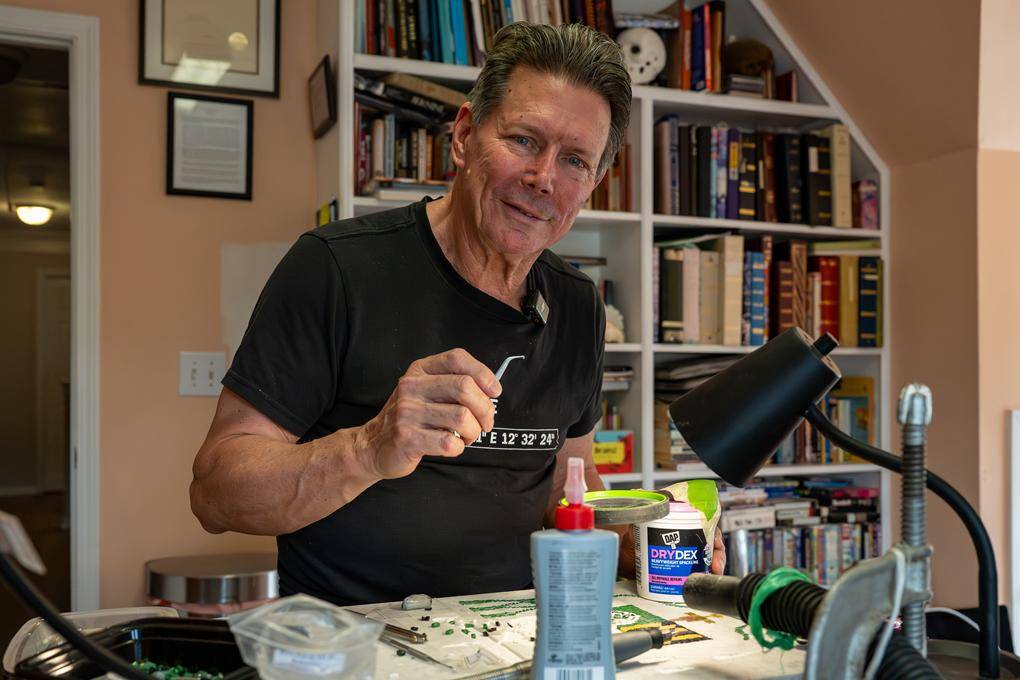
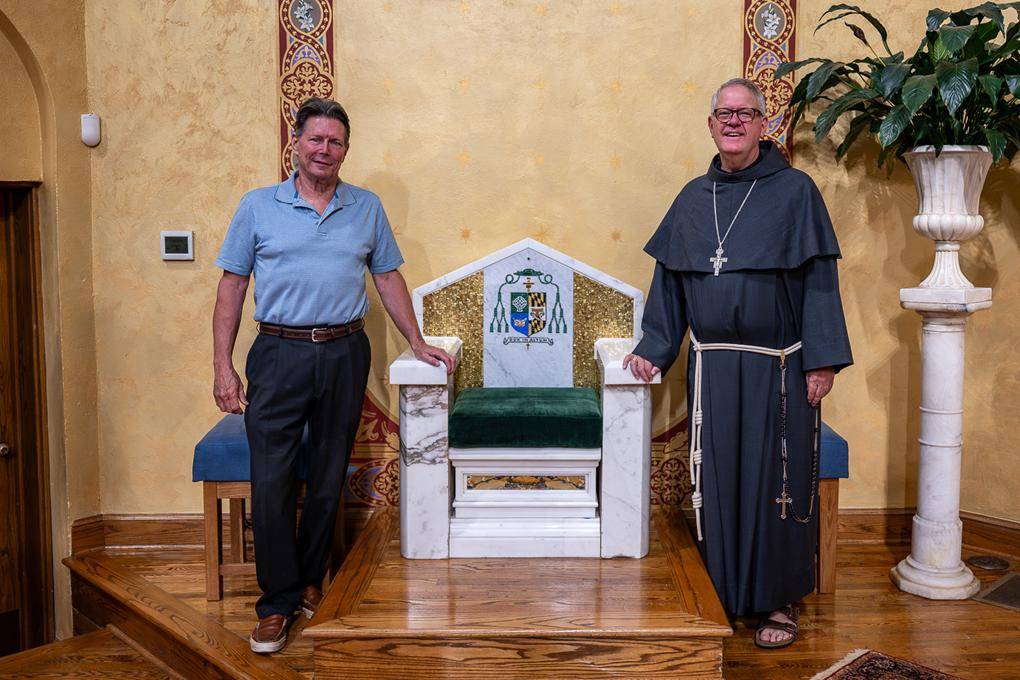
 CHARLOTTE — Christ the King High School fine arts teacher Greg Stump is used to assigning projects to his students, but he was given a unique assignment from his own religious instructor – the bishop. His task? Updating the coat of arms on the bishop’s chair.
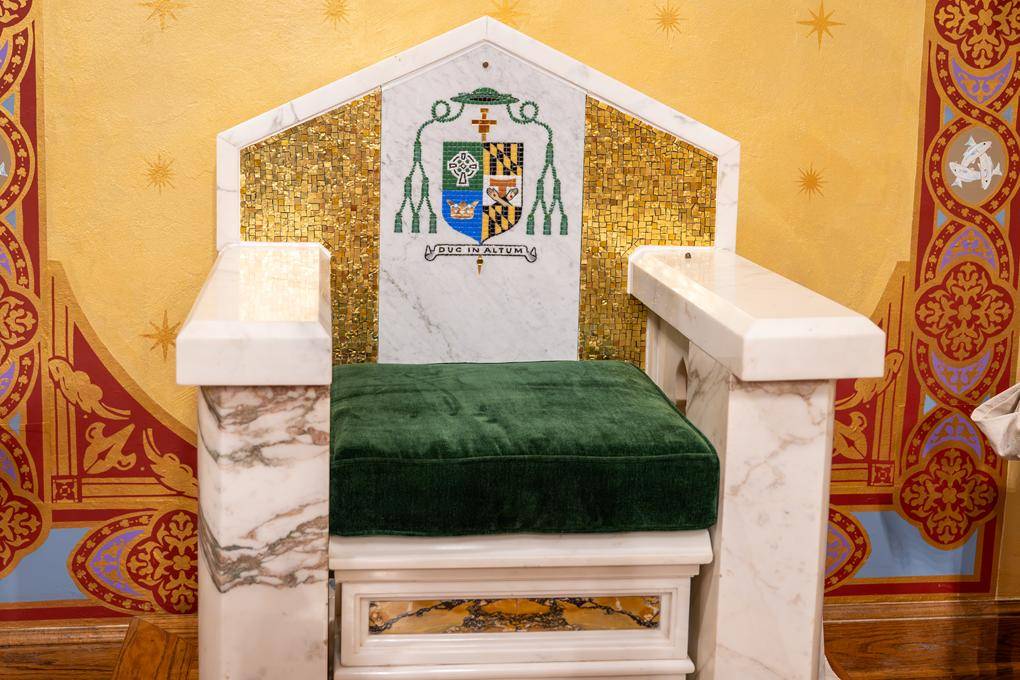
St. Patrick Cathedral in Charlotte is known as “the seat of the bishop” metaphorically and literally with its marble chair, called the cathedra, that symbolizes the bishop’s leadership. The seat is made from marble pieces of the old high altar, which was removed during a 1979 renovation. The cathedra was used by Bishop William Curlin and Bishop Peter Jugis, and now by Bishop Michael Martin. The engraved marble backrest is updated to reflect each bishop’s personal coat of arms – a tradition stemming from the 14th century.
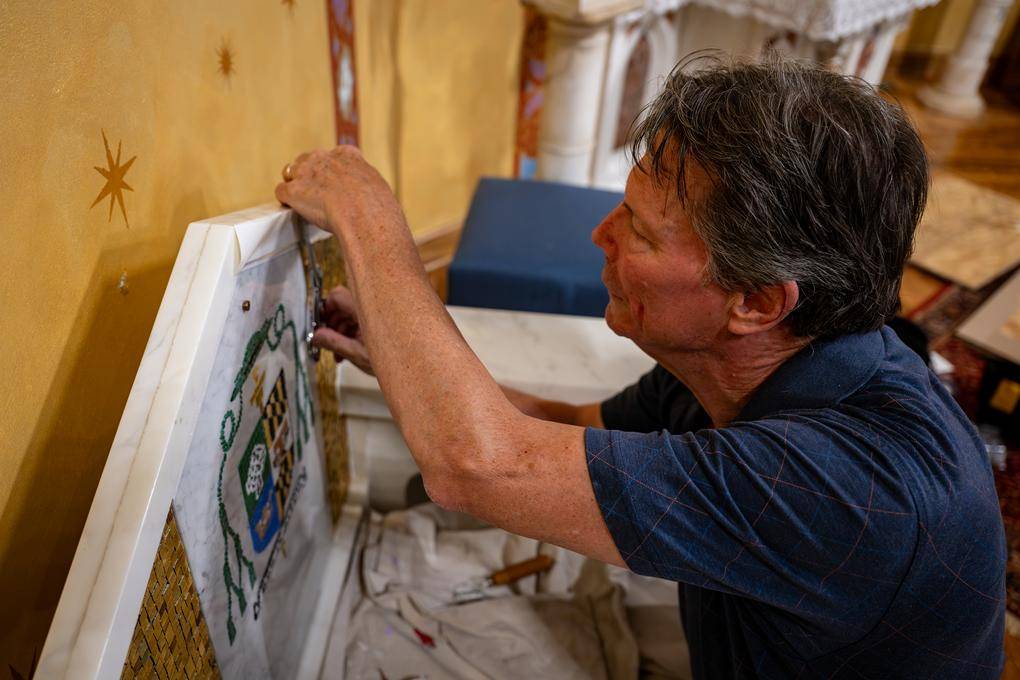
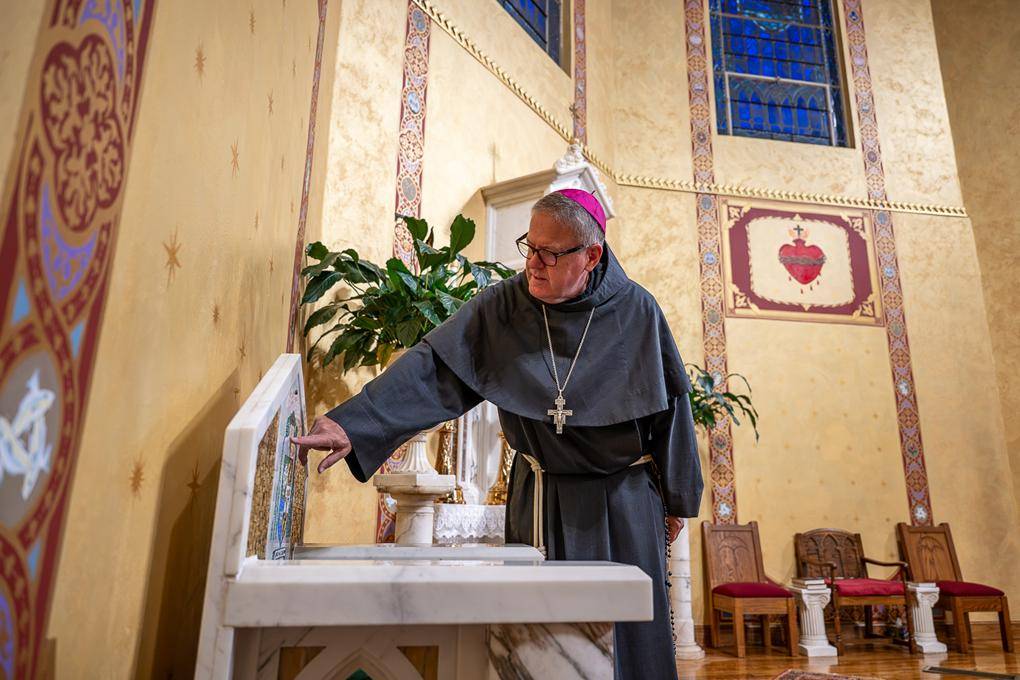
“I am just amazed by Greg’s craftsmanship and the artistic quality of the piece,” Bishop Martin said as he blessed the completed work on July 23, a little over two years after he was installed as the fifth bishop of Charlotte.
“It has such detail that it is painstaking,” Bishop Martin said.
Diocesan leaders wanted to keep the commission “in the family,” and Stump, with 20 years of experience in stained glass art and previous commissions around the diocese, was the perfect fit.
Stump, who has worked at Christ the King High School for 13 years, crafted pieces there as well as the Our Lady of Guadalupe mosaic at St. James the Greater Church in Concord and multiple stained-glass windows at St. Mark Church in Huntersville.
Yet the cathedra was Stump’s first armorial-bearing commission and his first experience engraving marble.
“I enjoy the challenge of working with a brand-new medium,” Stump said. “But it is a time-consuming process that requires a lot of patience.”
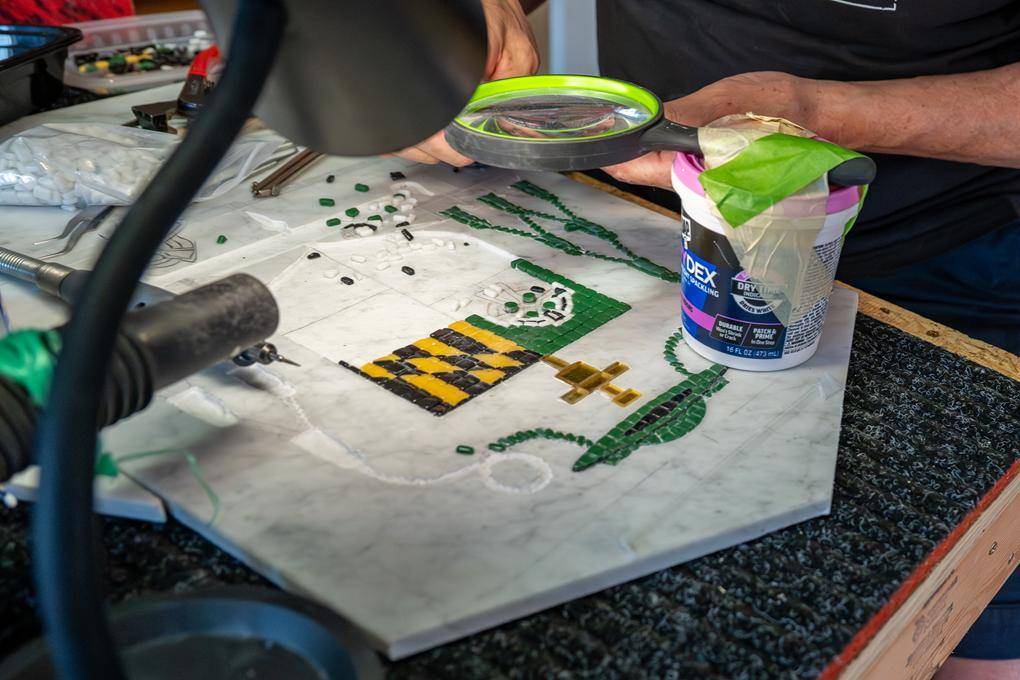
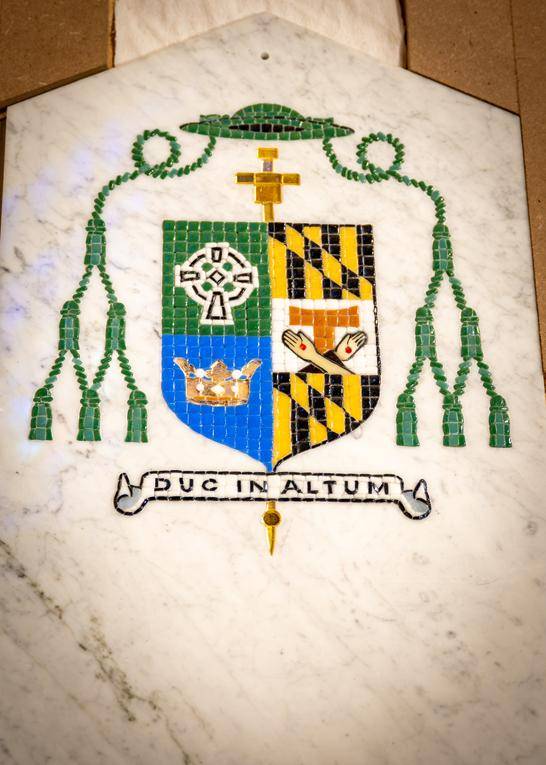
Over the past six months, he spent weeks delicately carving the white Italian Carrara marble – the same type used by Michelangelo to carve The Pietà – to inlay small hand-cut pieces of mosaic tile, gold-leaf glass and stained glass.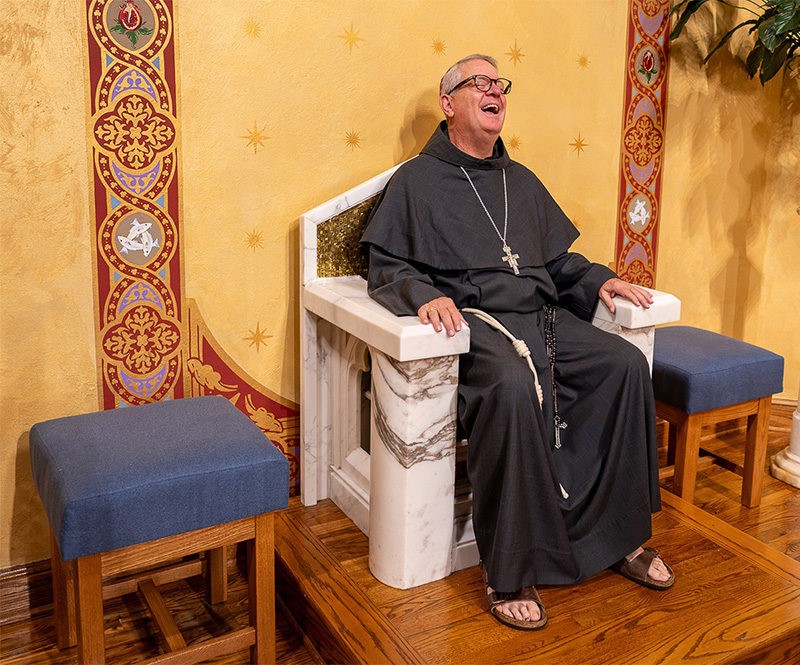
“You can’t make a mistake. If you fracture the marble, it is game over, and you have to start over,” Stump said.
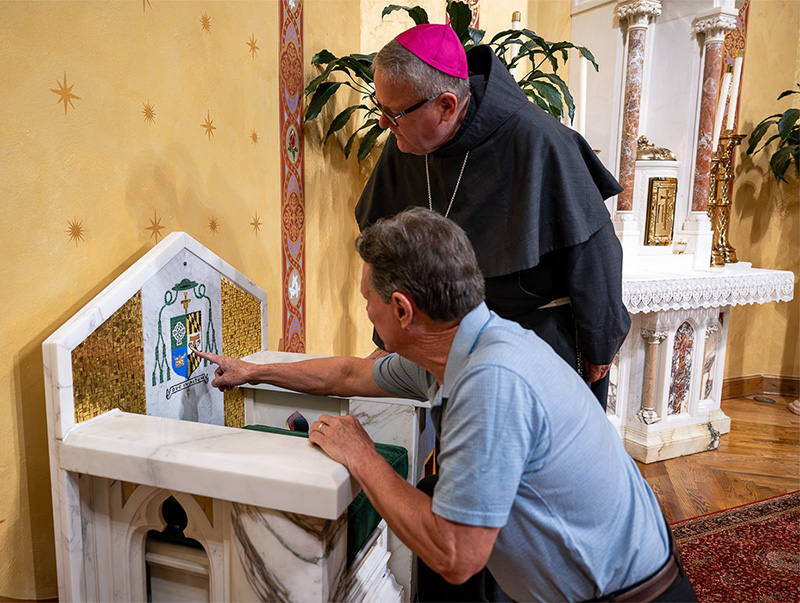
He practiced on different materials so he wouldn’t fracture the stone, but he did run into other challenges. The two crossed arms bearing the nail wounds of the stigmata – the bare arm signifying Jesus and the sleeved arm of St. Francis of Assisi were ‘painstakingly’ intricate,” he said.
“The arms were cut out of stained glass and kiln-fired to get the details of the blood drops and the outlines,” Stump noted. “I had to drill holes where the stigmata is and put red glass in there.”
With a smile and laughter, the bishop enthusiastically embraced the intricate artwork.
“When you look at the small details, you realize the time it takes to do something like this,” Bishop Martin said. “I am in awe of the craftsman.”
Stump credits God with his ability to create sacred art and prays this endeavor will help him on his next project, the Blessing Hand of God – a three-dimensional image he hopes to sculpt out of marble.
“Sacred art is the most meaningful art to me and gives me the most pleasure,” Stump said. “It brings people a little closer to the divine. And I like the longevity. … It is nice to think it will still be there one day when maybe I am not around.”
— Lisa M. Geraci
More online
At www.charlottediocese.org: Read about the meaning behind the bishop’s coat of arms and motto