


‘Treasure this moment’
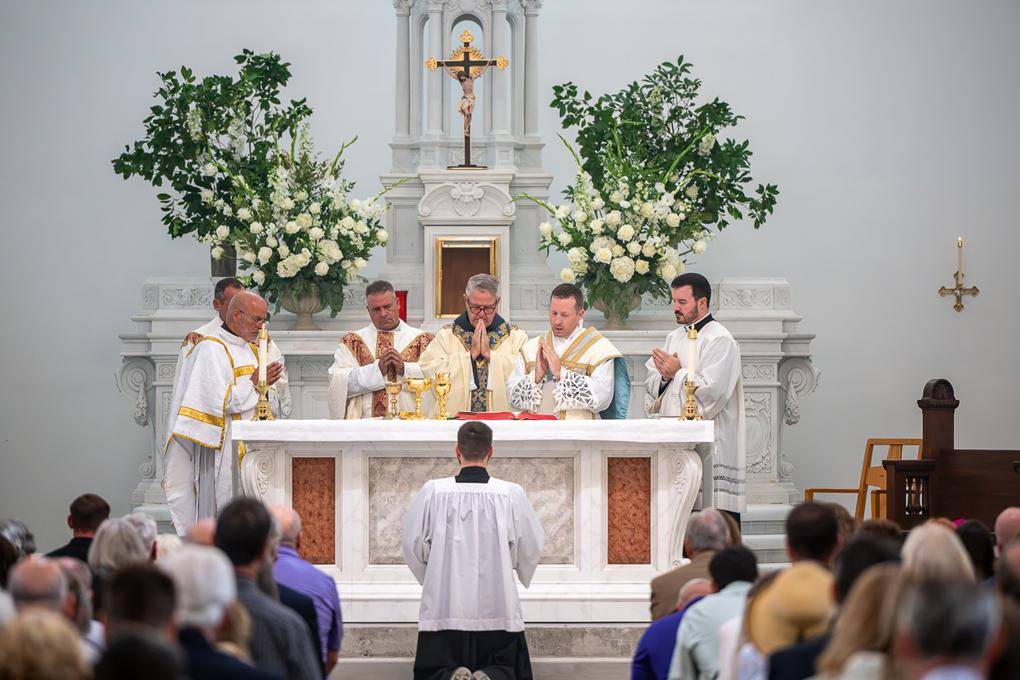
 HIGHLANDS — The consecration of a new Our Lady of the Mountains Church began Sunday with the chirping of crickets and ended with a cascade of rose petals, marking two milestones for the Diocese of Charlotte: a new church and a new parish.
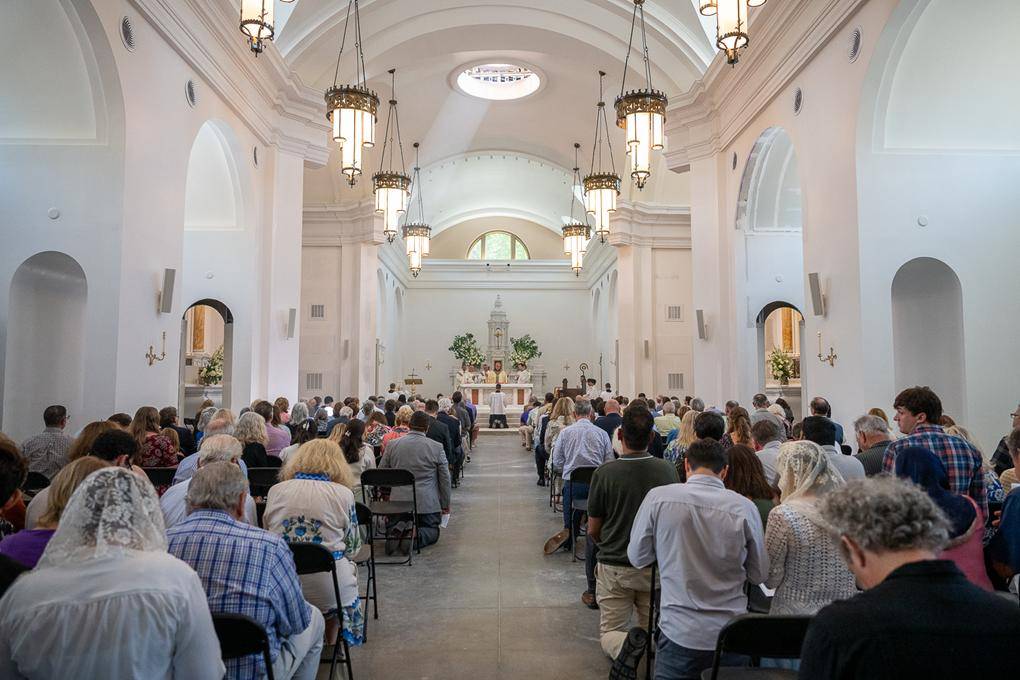
The Sept. 6 Mass was celebrated by Bishop Michael Martin and Father Jason Barone. It was a historic first for them both, as well as the 300 people who gathered inside the Baroque-style church perched atop a hill in the aptly-named town of Highlands.
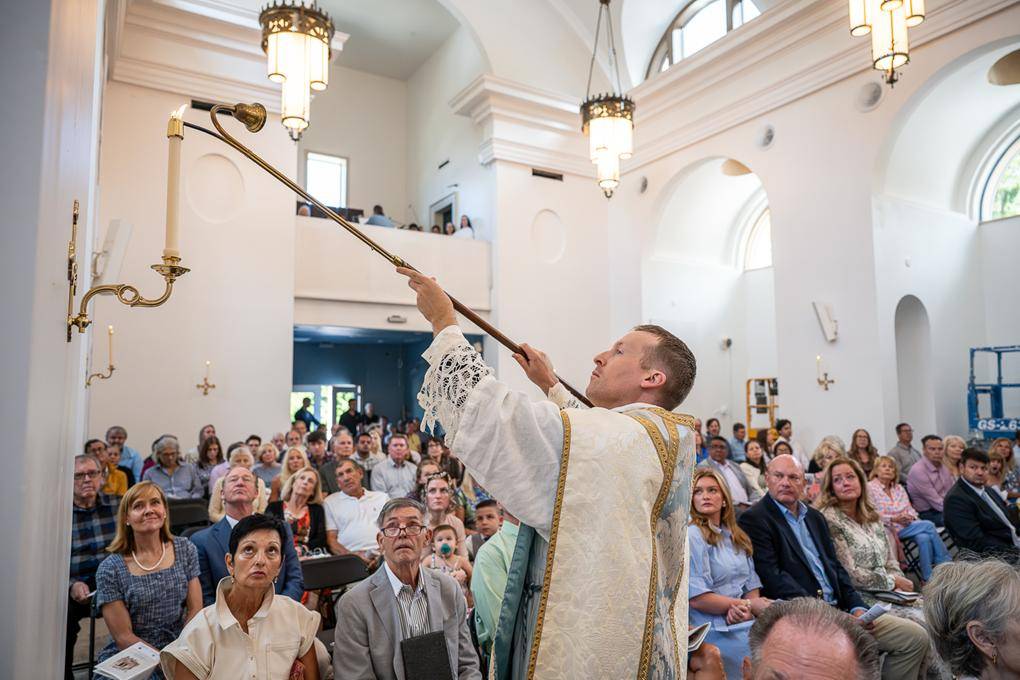
The 8,000-square-foot, $15 million church still needs some finishing work, but the consecration date was selected so the community could celebrate before the mostly seasonal congregation relocates after the Labor Day holiday. This was the first time many witnessed the special rite in which a building is consecrated and set aside as a sacred house of worship – and they were not alone in celebrating. Crickets inside the church had joined in with the voices of the choir singing the entrance hymn.
"Crickets... usually the mention of the word speaks to silence, and yet, this morning even the crickets rejoice,” the bishop joked as he greeted the congregation.
“This is, in many ways, probably a once-in-a-lifetime experience. I am 64 and have never been to one, let alone as the bishop,” he continued. “Treasure this moment – it is unique in the life of the Church.”
Sacred moments shared
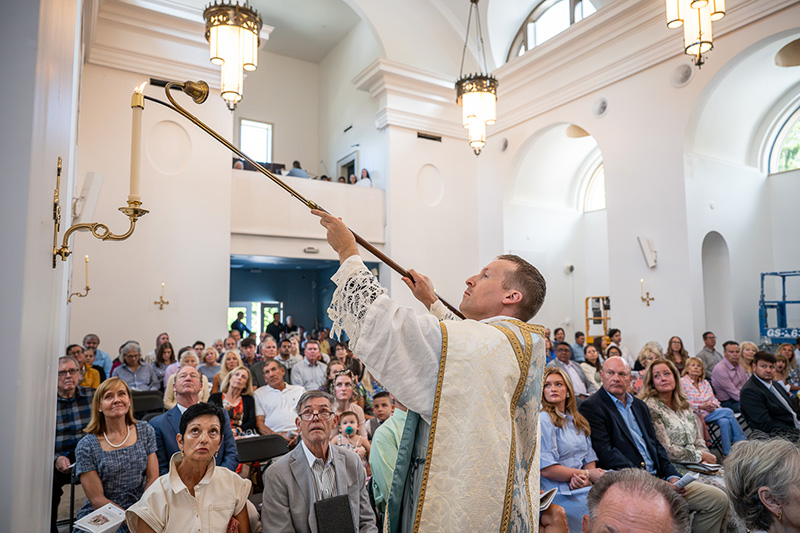
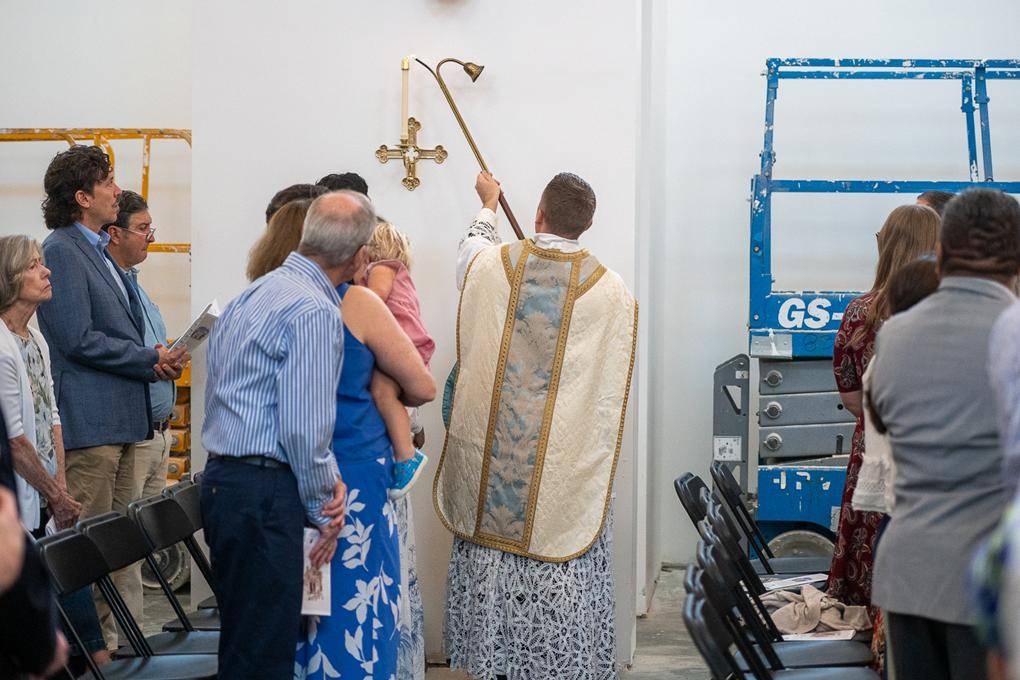
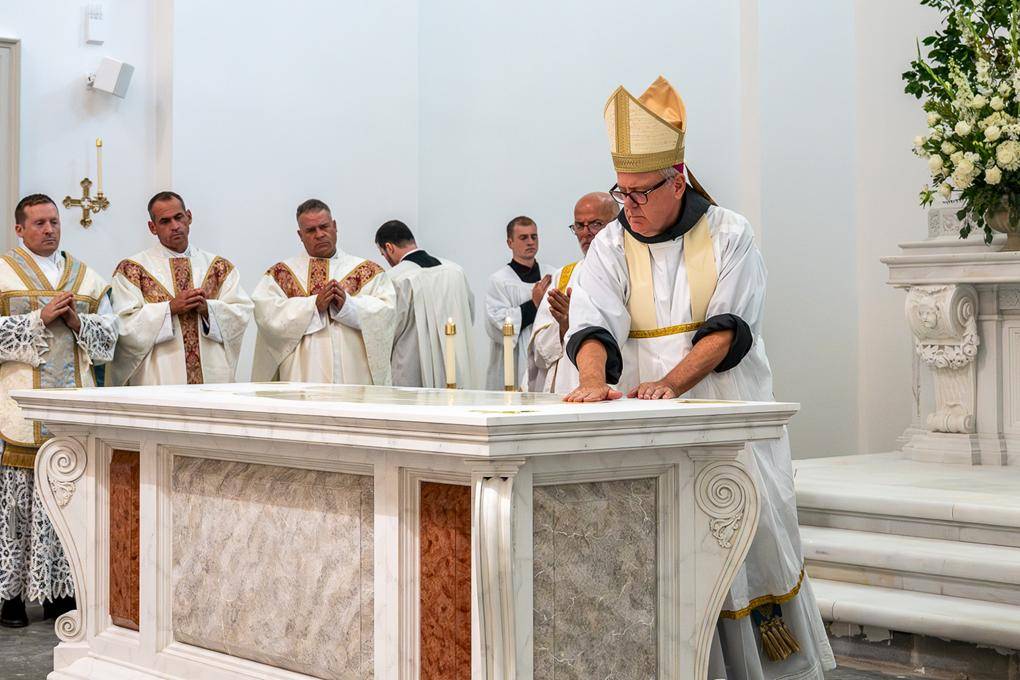
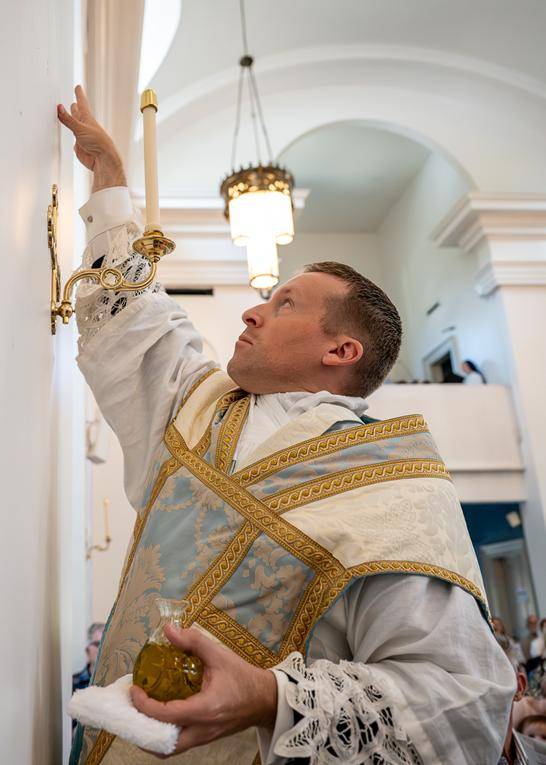
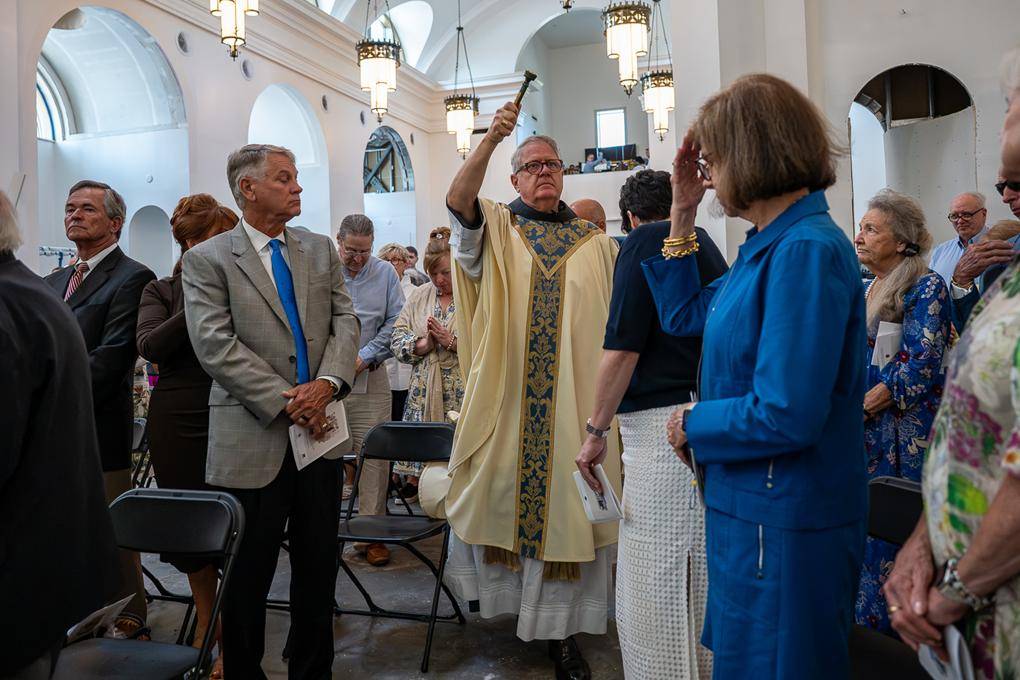
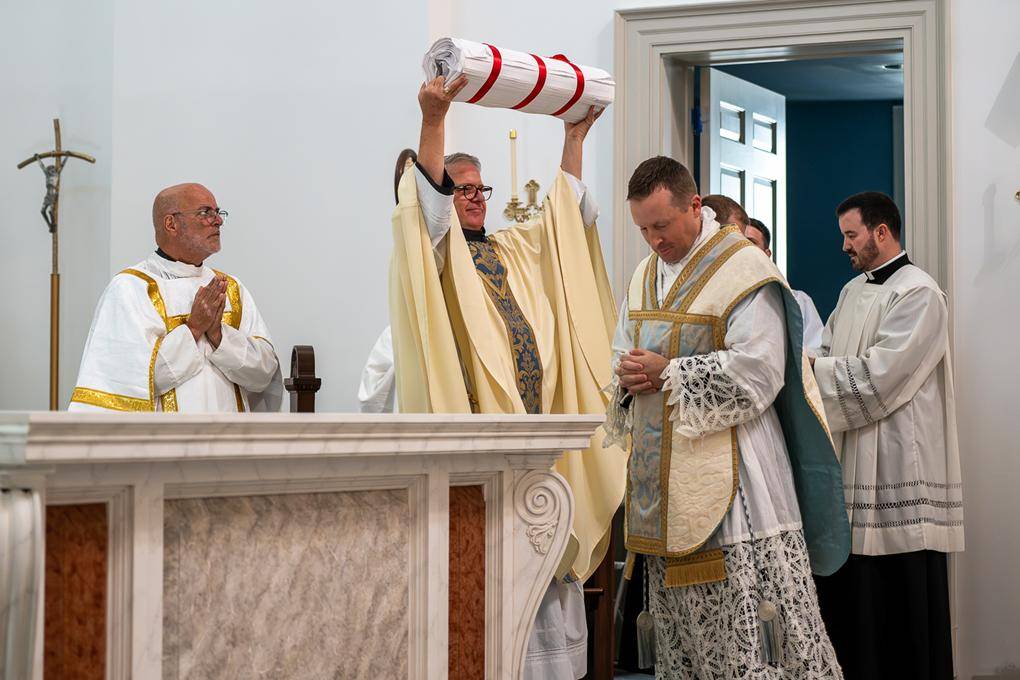
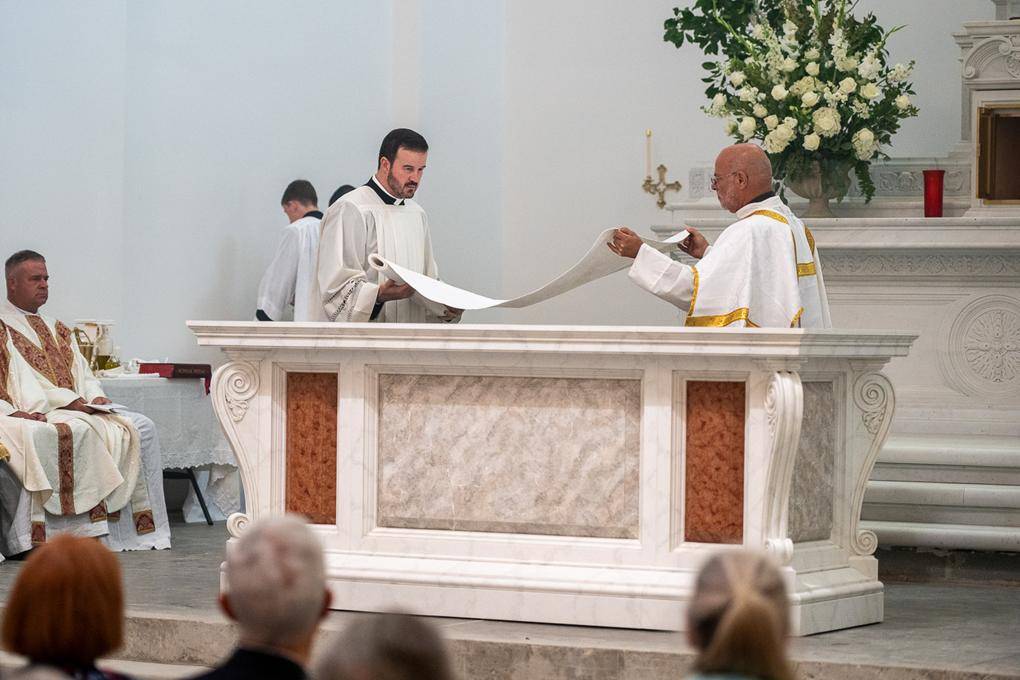
During the consecration rite, Father Barone formally presented the construction drawings to the bishop, who held them up to represent his acceptance of the church on behalf of the diocese. The bishop then blessed the walls of the church and the people with holy water.
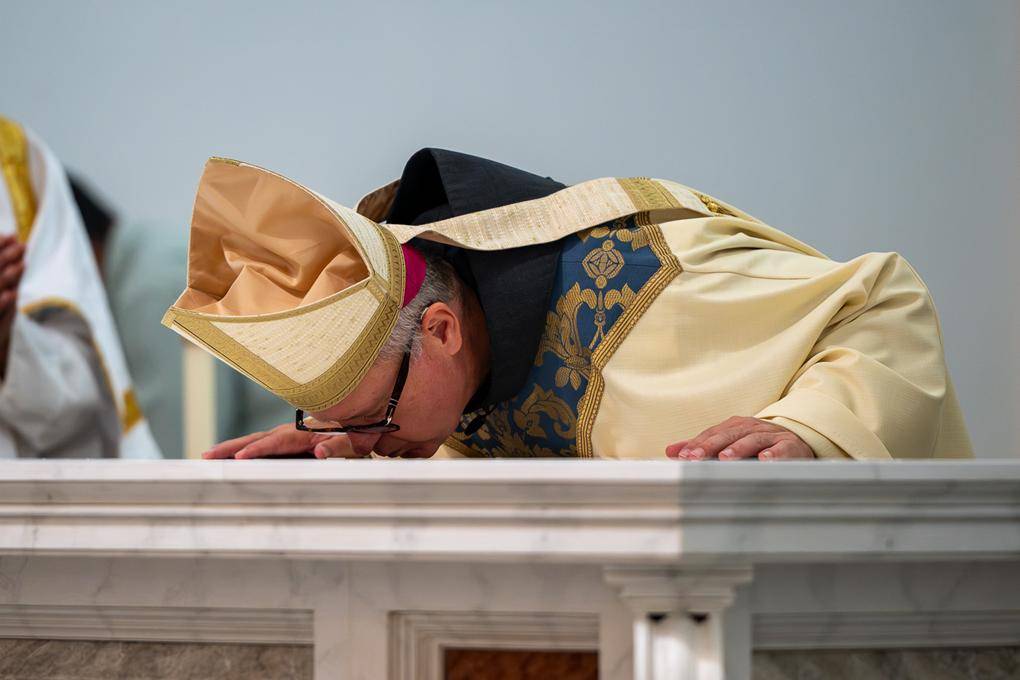
The choir sang the Litany of the Saints before the bishop sealed a first-class relic of St. Justine into the altar.
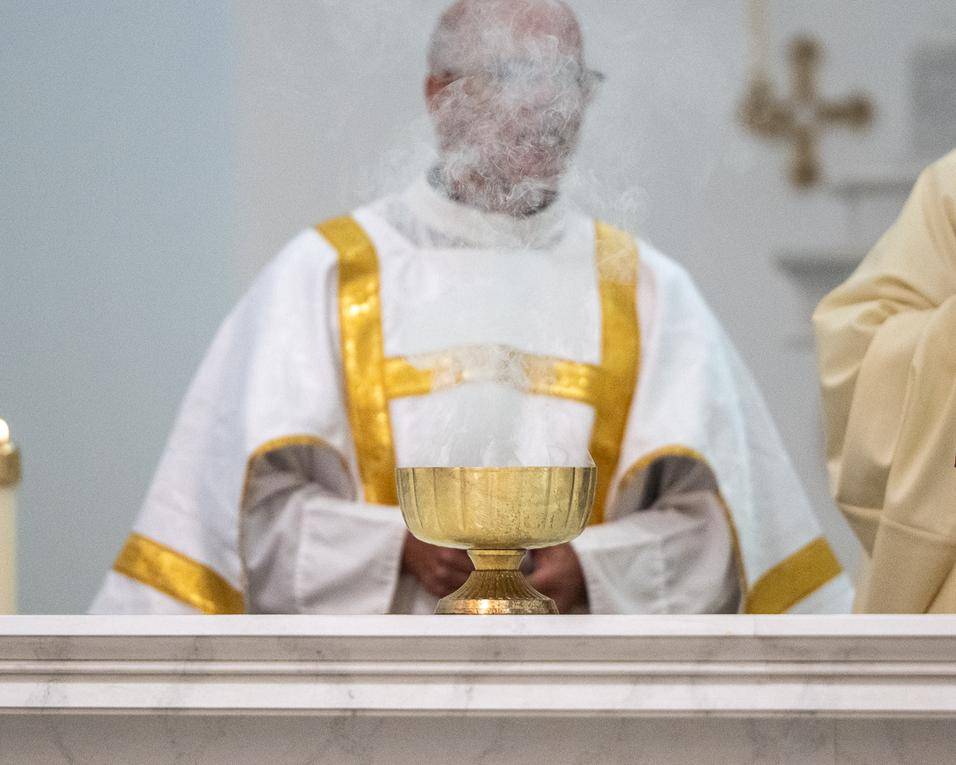
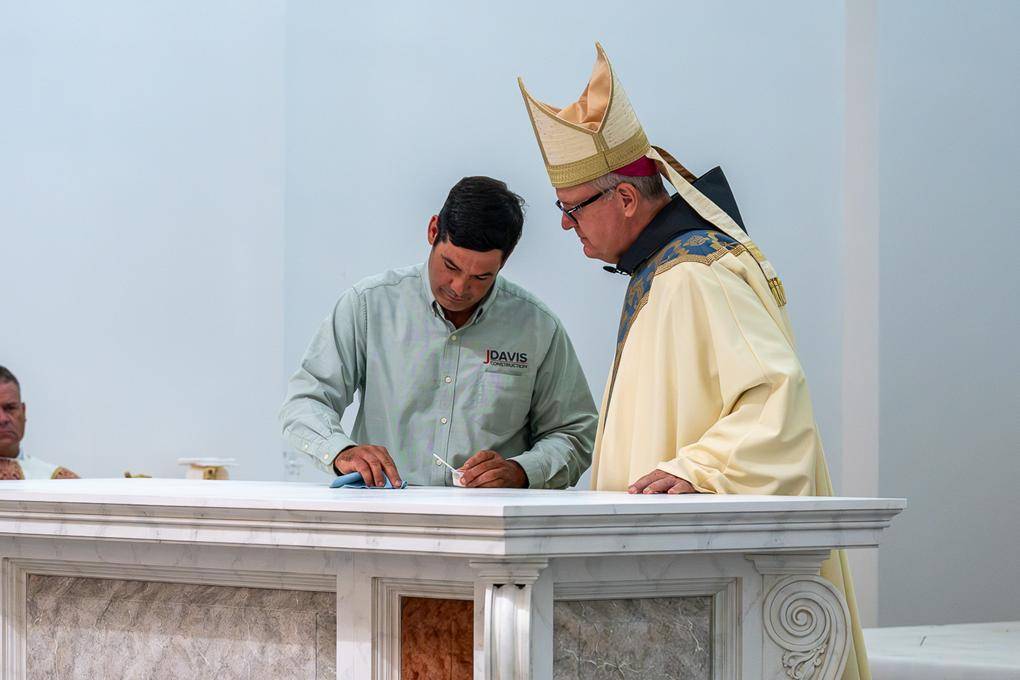
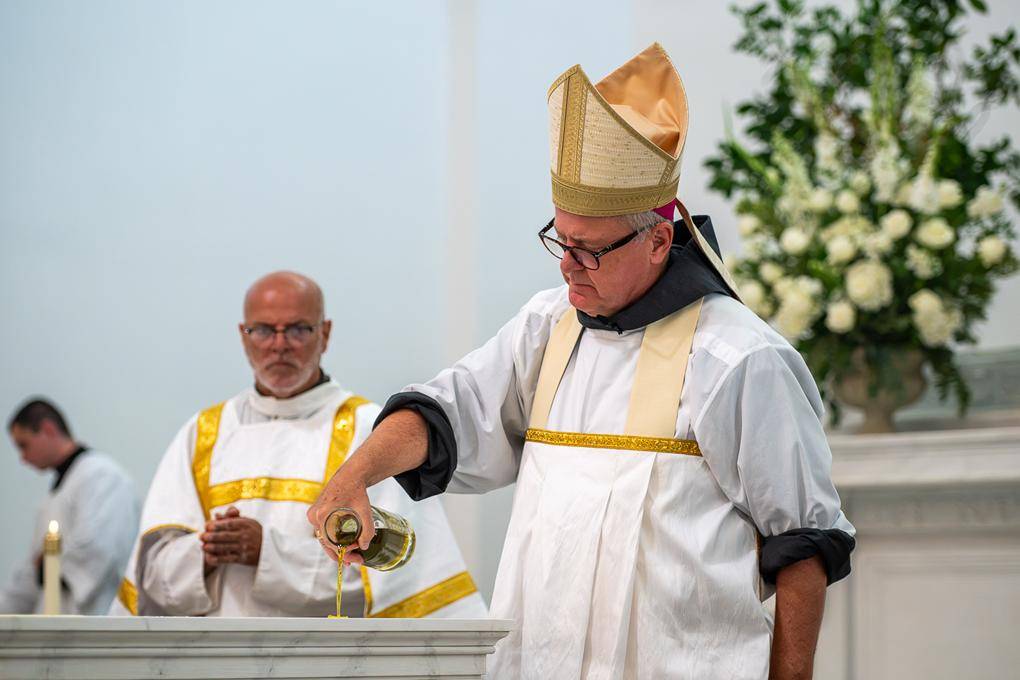
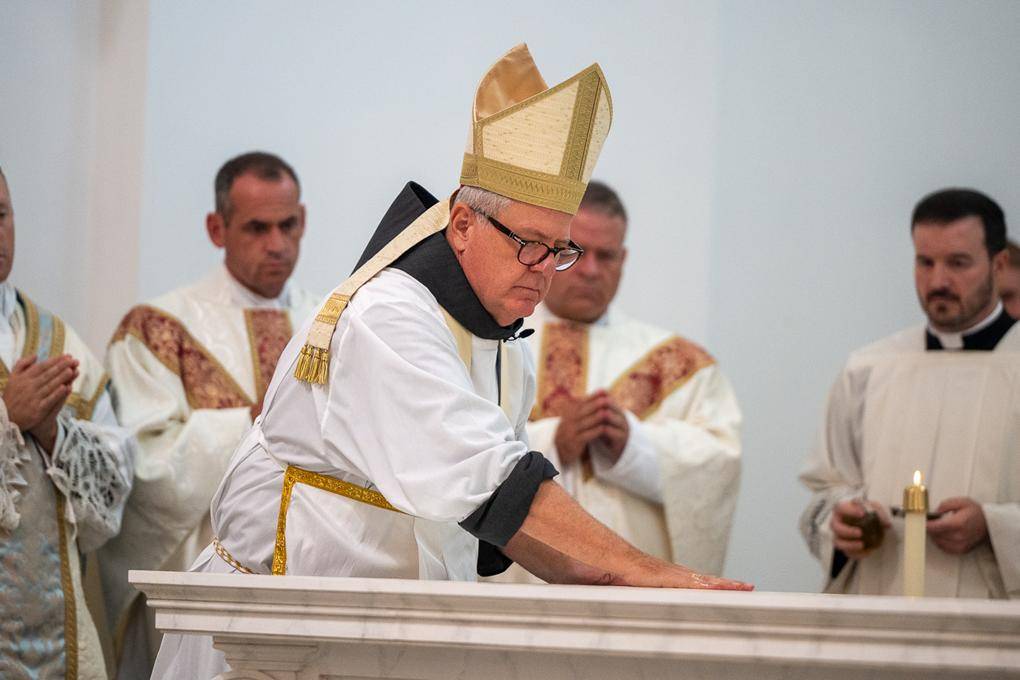
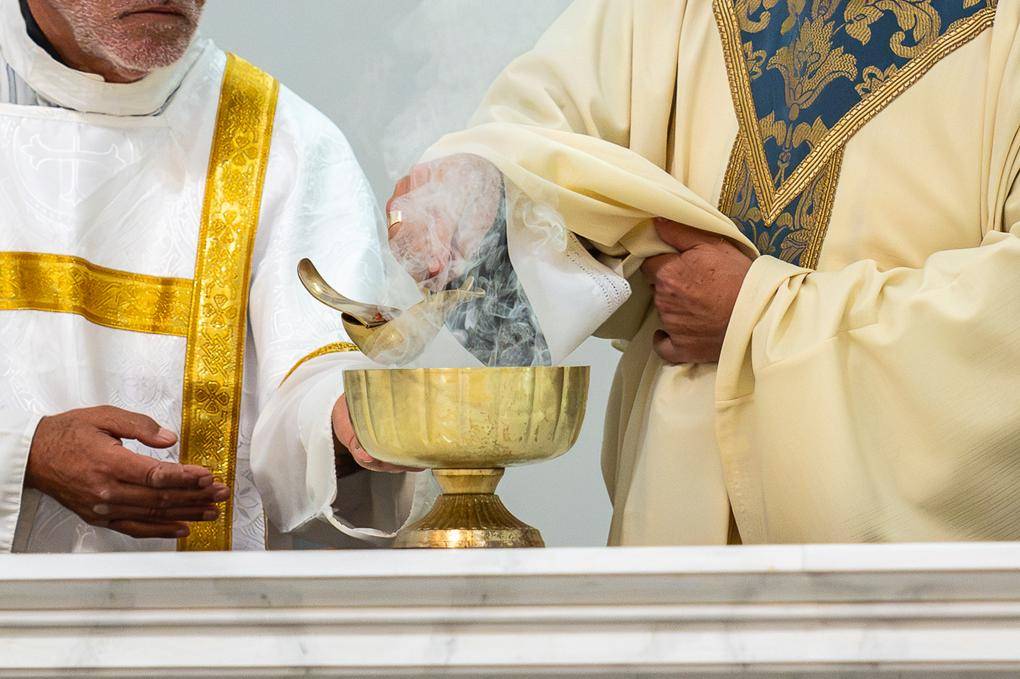
He then anointed the altar with chrism and lit a brazier of incense to represent the prayers of the faithful rising to heaven. Clergy then incensed the parishioners, and before the Liturgy of the Eucharist began, the altar was dressed in linens and candles were lit, representing the light of Christ.
A beacon to the world
In his homily, Bishop Martin noted the grandeur of the sacred space and encouraged the congregation to bring the joy of the day’s celebration out into the world – sharing the Gospel message of salvation with others.
“This beautiful new church stands as a beacon to remind us every single day of what the world needs and what we have been sent to accomplish,” he said. “We do not come here just to receive God's Word... we come here to be touched by it, claimed by it and to go forth to proclaim it by our lives and our words. If all we did was create a beautiful space to hear God’s Word and crickets thereafter, we have missed the purpose for which God’s Word goes out.”
His homily ended with a standing ovation as he praised the efforts of Father Barone, who has devoted many hours to planning the beautiful structure for his parishioners and for the glory of God.
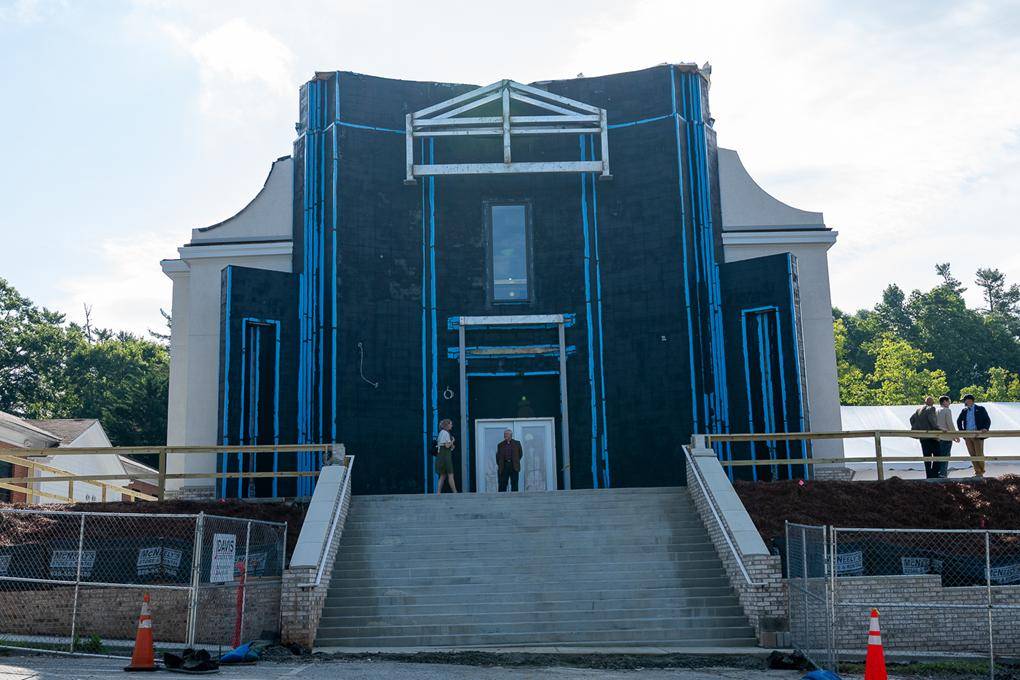
Bishop Martin noted it is fitting that the building is not yet completed, since the work of the Church is ongoing.
“Not in the studs that we still see exposed, not in the concrete floor… but in the way the Church envisions a holy, sacred space like this being a springboard for building the Body of Christ,” he said. “We have to build God’s kingdom wherever we go … now the real work starts. May this sacred space, this consecrated church, empower all of us to build God’s kingdom.”
A cascade of blessings
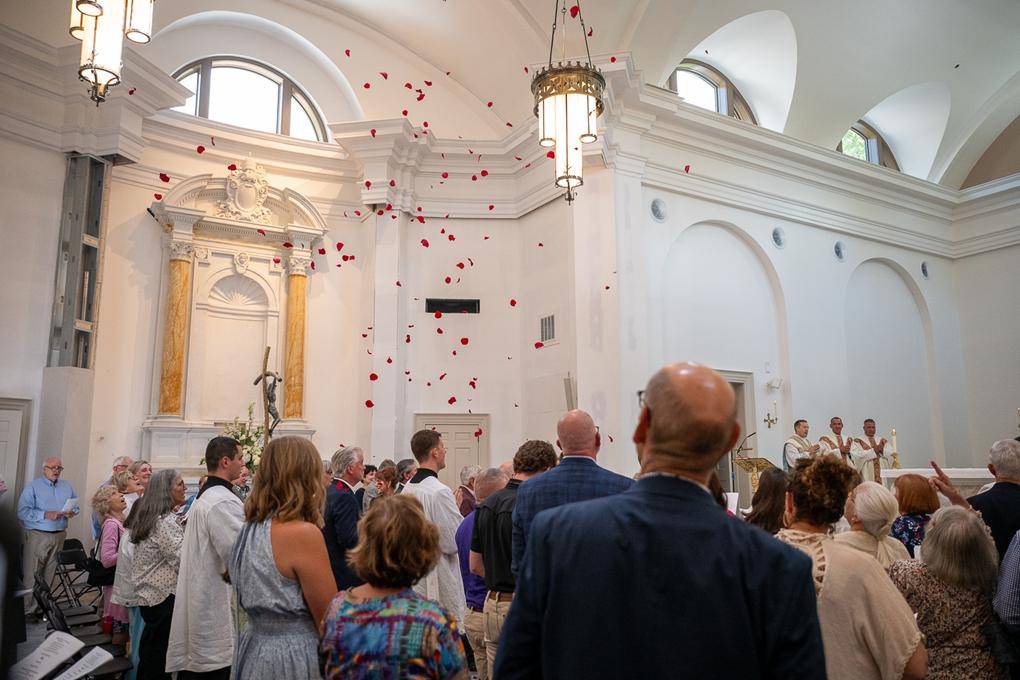
There was one final surprise. JD Davis, who spent most of the last year building the church, snuck up to the rooftop during the closing procession to drop thousands of rose petals through the oculus, a circular window in the dome of the new church.
This cascade of petals through the oculus is a tradition that dates to the year 609 at the Pantheon in Rome, and represents the Holy Spirit’s descent on Mary and the apostles at Pentecost.
It awed the congregation, bringing many to tears, and had some pocketing a petal to remember the moment.
“This was very emotional for me. I cried... when the roses came down from the ceiling,” said Deacon Sigfrido Della Valle. “I always associate roses with Mother Mary. To me, that is the number-one symbol of the Virgin Mary, and it was unexpected.”
Catherine Turner, a longtime parishioner, was also struck with emotion.
“We are the Church Militant and, like the bishop said, we still have work to do. Up there is the Church Triumphant, (in) heaven, and that is where the petals were coming from,” Turner said. “We just consecrated this place, and now it's God’s house.”
Climbing a mountain of faith
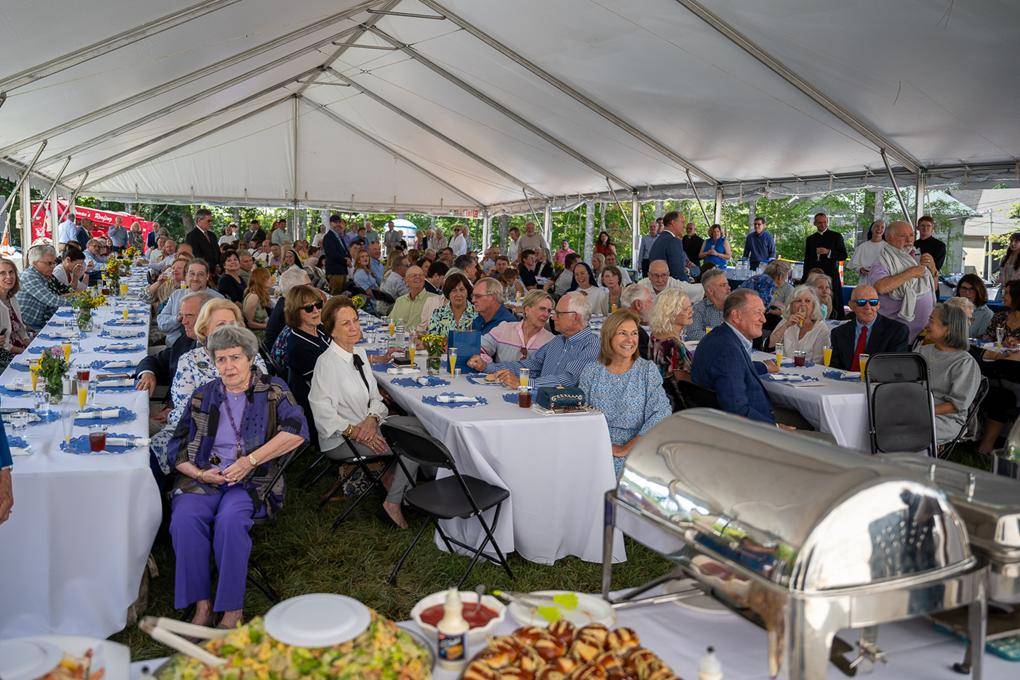
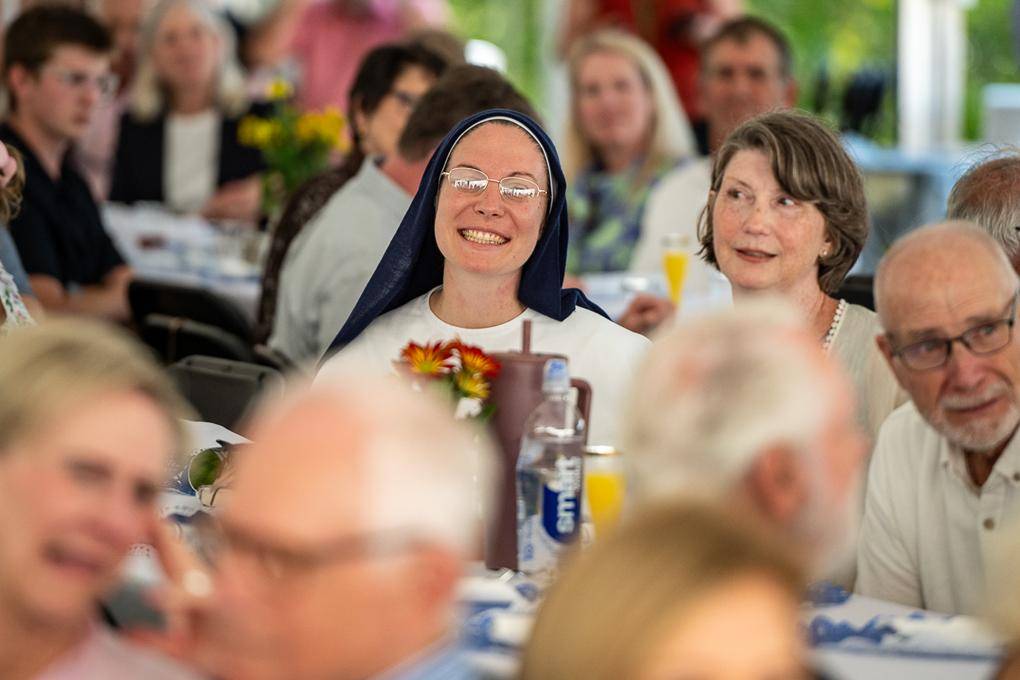
After Mass, the congregation gathered to celebrate its history, the day’s consecration and the community’s future. Father Barone announced that Our Lady of the Mountains would soon be elevated from a mission of St. Francis of Assisi Church in Franklin to parish status.
That change became official Sept. 8, when Bishop Martin elevated Our Lady of the Mountains to a parish and appointed Father Barone as its first pastor. He had served the Highlands Catholic community as parochial administrator since 2019.
“We first made our mark here in Highlands in the 1950s with a cornerstone for our church, and now we made a slightly larger mark here today,” Father Barone said.
The mission was started in the 1940s by Glenmary missionaries to evangelize in the region, where Catholics were scarce.
Marie Schmitt, her husband and four children moved to Highlands in 1965 and were the first full-time members.
“People came and went during the summer months, but for a long time we were the only family here in the wintertime,” the 93-year-old laughed. “Lots of times Father would have Mass in the little church that was freezing cold because there was no heat.”
Schmitt remarked that the new church was gorgeous, and she is moved by how much the Catholic community has grown.
“This place has been my life since 1965, and I am so proud of it.”
— Lisa M. Geraci. Photos by Troy C. Hull. Story updated Sept. 18, 2026, to include Father Barone's appointment as pastor of tne new parish.


Vision of Catholicism on a hilltop
The Baroque-style church may contrast with the surrounding mountain landscape, but it embodies Father Jason Barone's vision and will serve as a teaching tool for locals, tourists and parishioners – a lesson in the Catholic faith made of limestone and stucco, he said.
The exterior front wall, currently particle board covered with black paper and blue painter’s tape, will soon be transformed into a 35-foot limestone facade adorned with a statue of Our Lady of Mount Carmel holding the Christ Child. The words “Behold thy mother” will be engraved underneath the statue as a nod to both the Blessed Virgin Mary and the Church as mother.
Once finished, the interior will literally be supported by the seven sacraments, represented by arched niches lining both sides of the nave. Each will have its own window, allowing “the grace of heaven to shine through.”
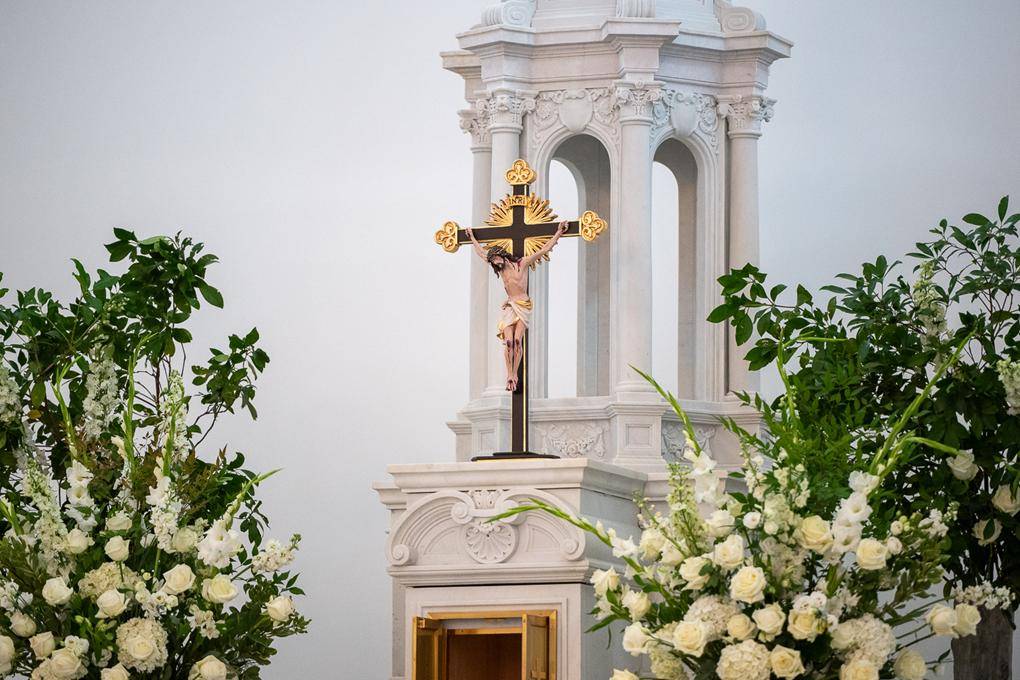
The tabernacle is flanked by niches to St. Joseph and the Blessed Mother.
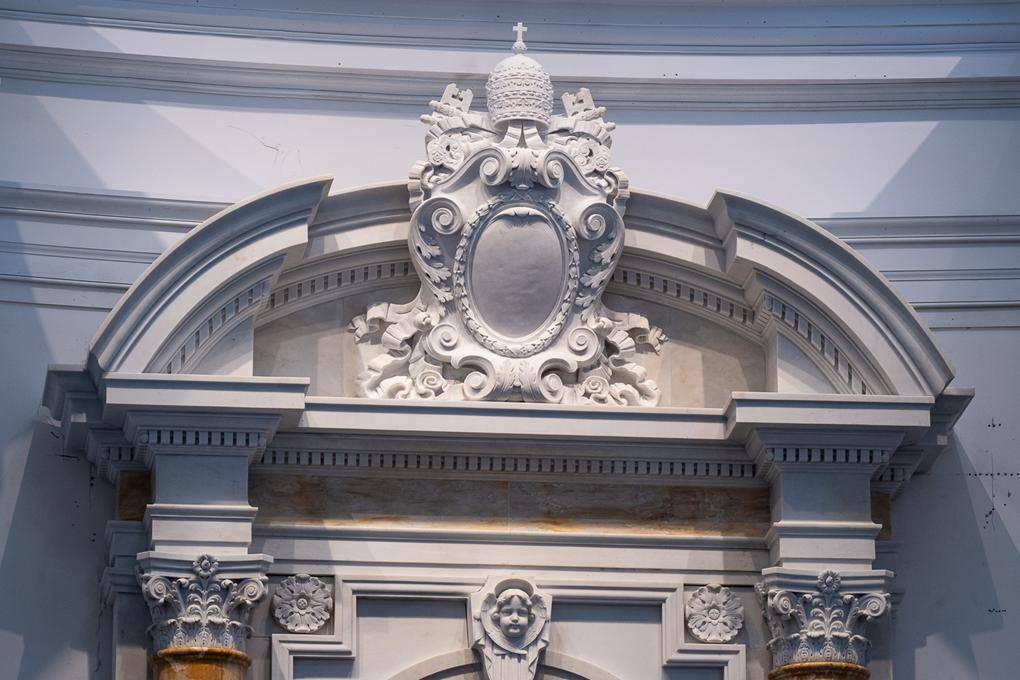
Plans call for the large interior dome, the walls and the marble altars acquired from St. Charles Borromeo Seminary in Philadelphia to be textured with elaborate patterns and painted with sacred images – all reflecting the beauty of Catholicism through the Baroque architectural style.
Baroque architecture originated in Rome in the late 16th century after the Council of Trent, which was the Church’s response to the Protestant Reformation.
Catholic architects designed ornate churches featuring spatial drama, dramatic curves and rich textures to inspire a sense of awe in God’s presence.
“Father had a vision for this Baroque church, calling it ‘the Catechism in stone,’” said parishioner Catherine Turner, who was active in the campaign to build the church. “It was a vision, and I thought, to build that type of church in this day and age when churches are closing and consolidating – I had to help. People think: Highlands, why not make it look like a mountain church? We are about building a Catholic church, and no matter where it is, it should look like a Catholic church. You don’t do things for the human factor; you do them for God.”