Voice for the vulnerable
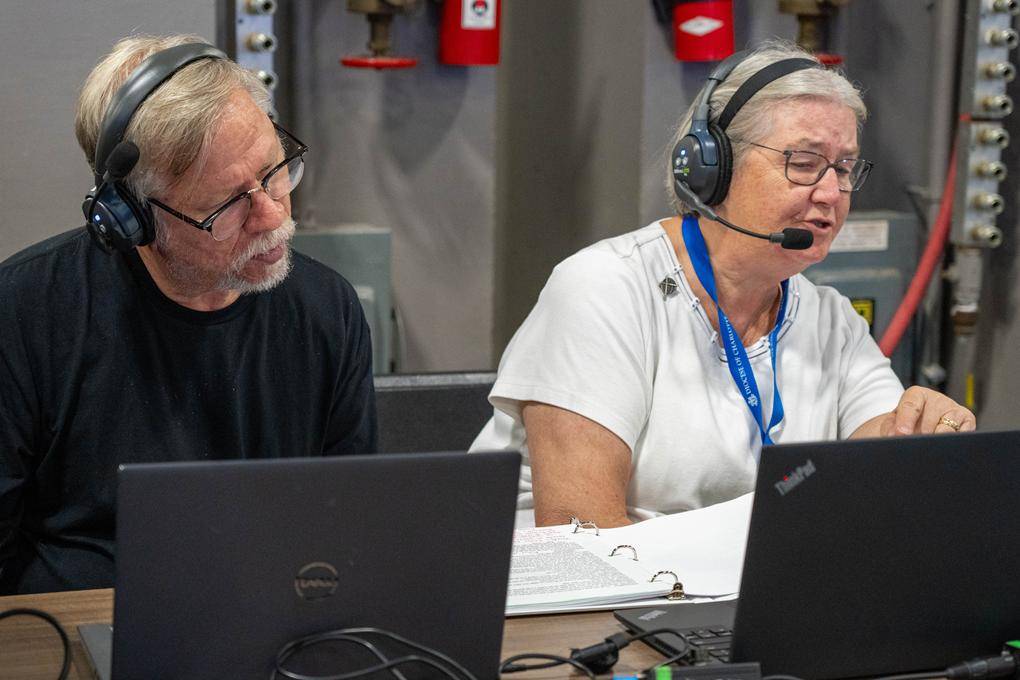
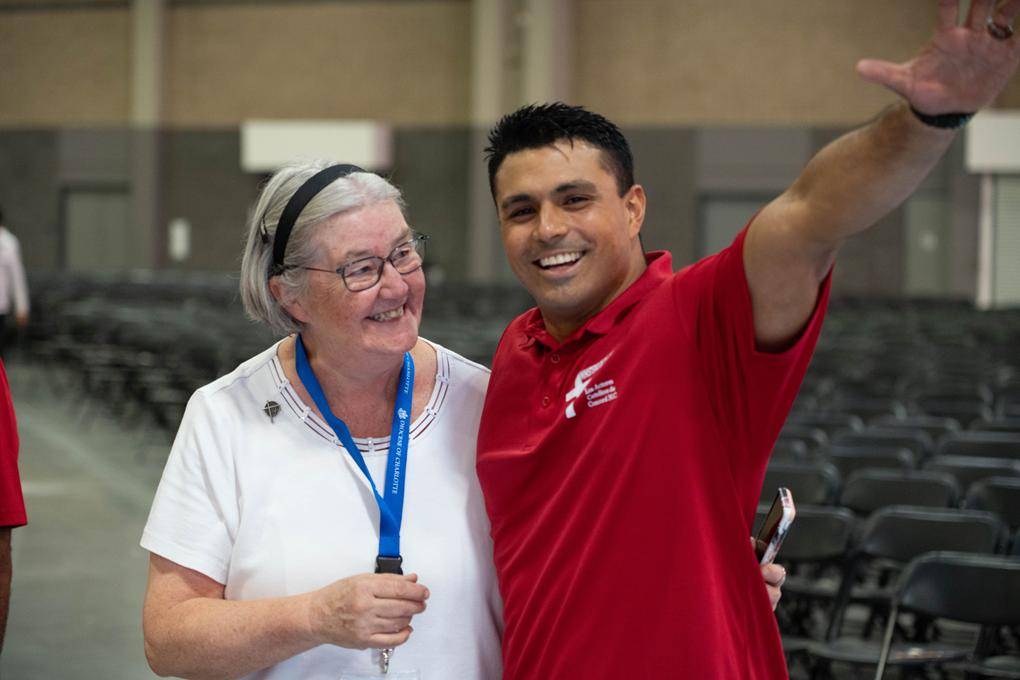
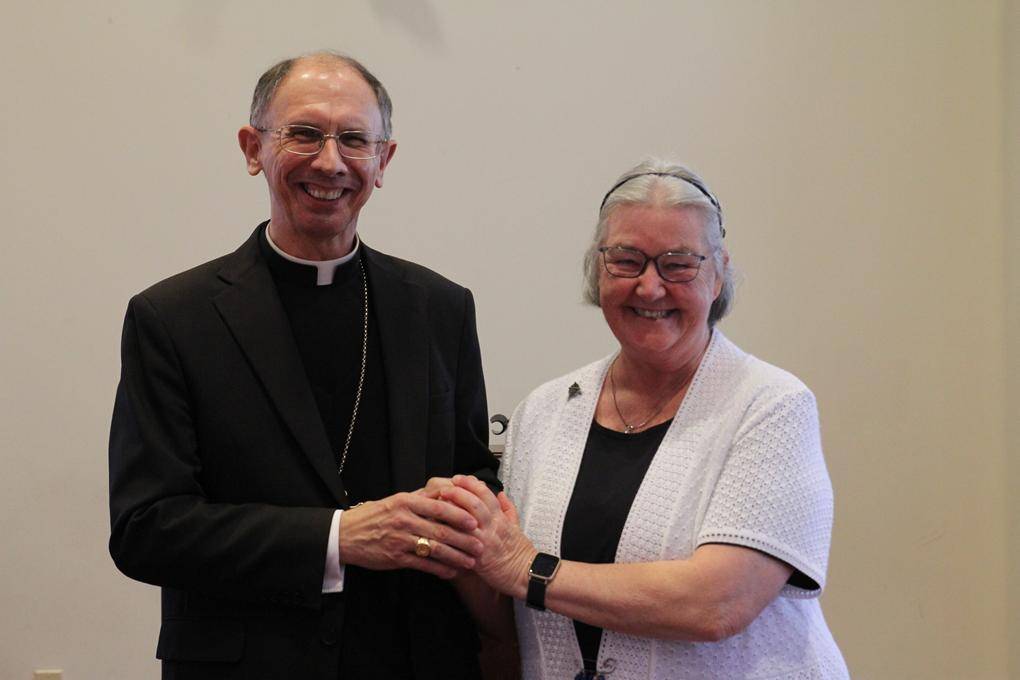
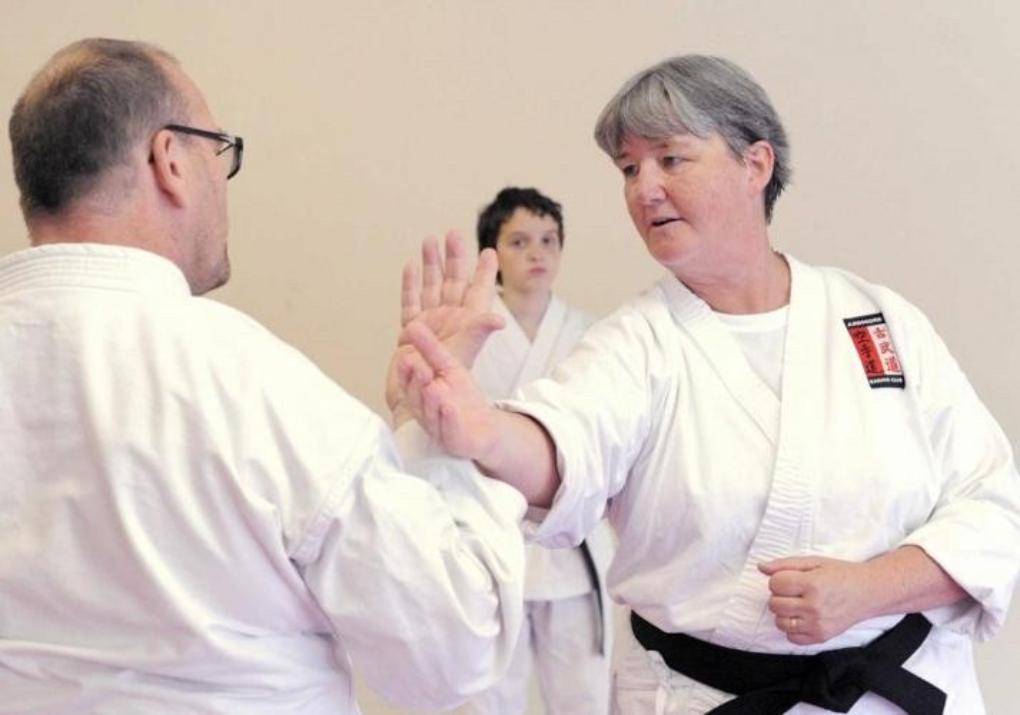
 Sister Joan Pearson grew up in the Diocese of Charlotte and has served here for many of the past 56 years. (File photos | Catholic News Herald)CHARLOTTE — Sister Joan Pearson looks like a jovial grandmother with her rosy cheeks, compassionate blue eyes, and warm, perpetual smile.
But don’t let that fool you.
With a black belt in karate and a passion for justice, she’s actually a fierce advocate for “her people,” that is, people living on the margins – the poor, the immigrants, the homeless, minorities – people with whom she has spent a lifetime. For 56 years, Sister Joan has ministered from big-city slums to the backwoods, along the southern U.S. border, and for the last 30 years in the Diocese of Charlotte – which until recently was considered “mission” territory by the Catholic Church.
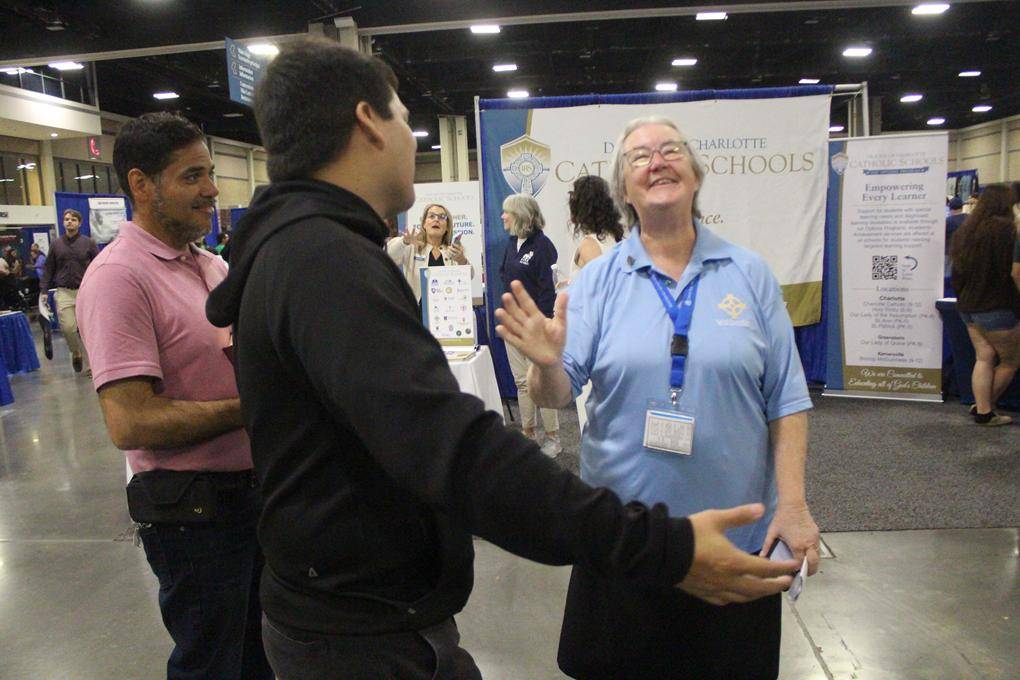
Sister Joan has focused her work in North Carolina on the complex needs of Hispanic Catholics and communities. She tends an immense network of contacts that can reach thousands, and was instrumental in providing information during Operation Charlotte’s Web, when ICE came to town looking to arrest immigrants.
Her work has led to the creation of faith formation programs, leadership positions, retreats, and continued growth within the Hispanic community.
Now, at 74, she is preparing to retire – which actually will be more of a transition from formal fulltime work at the diocese’s headquarters to volunteering for the Church.
Currently the Assistant to the Director of Hispanic Ministry, she jokes that she wants to become a Walmart greeter “because I love people.” But if you know Sister Joan, her idea of volunteering will almost certainly exceed the demands of a full-time job.
As a Sister of St. Joseph, she embodies the mission of her religious congregation, founded in 1650 around a kitchen table in France: “Our mission is to bring all into unity with God, one another, and with all creation,” their website says. They do so by serving “the dear neighbor, standing with and for the poor and vulnerable, and by advocating for systemic change.”
“That’s Sister Joan to the core,” says longtime friend and colleague Jim Kelley, the diocese’s director of development. “She’s always taking people in power to task to make change that will help improve the lives of those who are less fortunate. Yet she does so in a light-hearted way that makes people listen.”
Monsignor Patrick Winslow, the diocese’s vicar general and chancellor, has been on the receiving end of Sister Joan’s advocacy more than once.
“She’s kind and affable – and that’s what makes her particularly effective,” he says. “She’s just a joy. You smile when you see her coming. And her delivery is always done in good humor.”
Lesson in equality
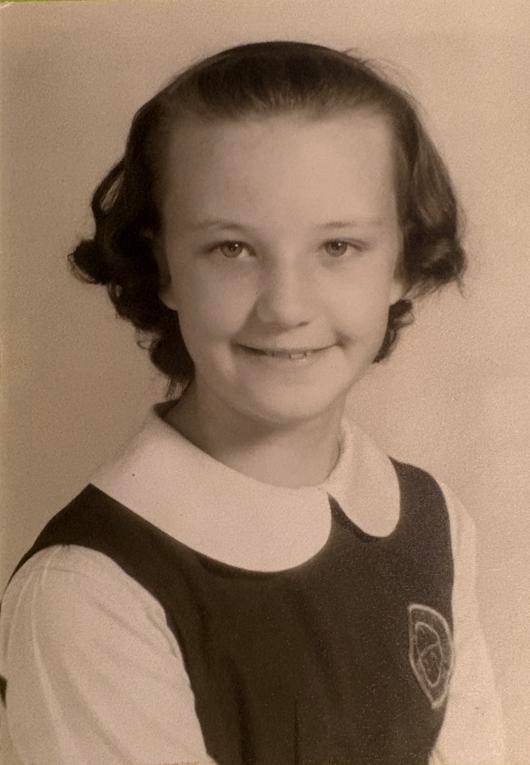
The oldest of five girls, young Joan – then called Anna – grew up in a devout Catholic family on a gravel road in Old Town, near Winston-Salem. “We weren’t poor,” she says, “but there wasn’t a lot of fluff.”
One day, when she was 6 or 8, she and her mother were examining an illustration of two girls longing to climb the stairway to heaven. The white girl, as Sister Joan remembers it, was several steps up on the staircase, on her way to heaven, while the black girl was left behind on the ground.
“That’s not right,” her mother told her. “This girl should be on the same step as this girl.”
It was a lesson in equality she never forgot and one that deepened as she came of age in the 1960s. Sister Joan also absorbed her parents’ Catholic influence: Her mother, a homemaker, was a member of the Catholic Daughters service group and a faith formation teacher. Her father, who served in the military, was a Knight of Columbus, a lector and a member of their parish council at St. Leo the Great in Winston-Salem.
A product of the Charlotte diocese, she attended St. Leo School and Bishop McGuinness High School, where the Sisters of St. Joseph would profoundly influence the trajectory of her life.
During summers, she accompanied the Mission Helpers of the Scared Heart as they went door-to-door in poor neighborhoods offering resources and evangelizing. On weekends, she spent time over at St.
Benedict the Moor, the African American church, helping with Masses and the faith formation classes.
“We didn’t consider the people there marginalized. We just saw it as a parish that needed help,” she said. “We were all in it together.”
She so loved the leadership and demeanor of the Sisters of St. Joseph that she wanted to become one.
“I wanted to be as happy as they were,” she recalls.
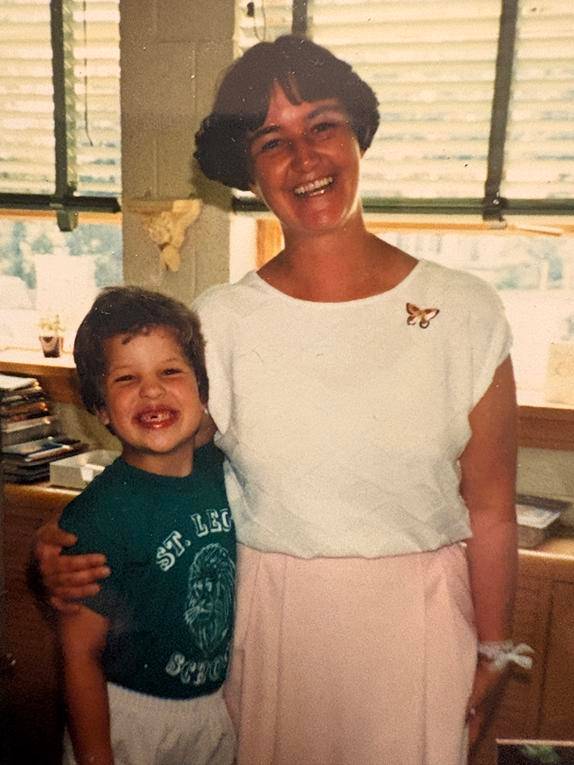
She entered the convent in Philadelphia in 1970 and began her career in religious life, which included serving as a group home supervisor, a clinical therapist and an elementary school teacher in the Italian sections of New Jersey, the Puerto Rican communities of Pennsylvania, and in urban areas of North Carolina.
She earned a bachelor’s degree in psychology and a master’s in counseling, and she began to pick up Spanish along the way.
Then, in the mid-1990s, while teaching at an all-Hispanic school in Bethlehem, Pennsylvania, she received an unusual request from North Carolina.
The Triad area was experiencing an “incredible explosion” of Hispanic Catholics, she says, and Father Jim Solari – pastor of St. Leo the Great – needed help. He requested a nun be sent down to work with the Hispanic population on outreach.
“When he made this appeal, they thought of me because they knew I was comfortable in the South,” Sister Joan recalls. “And, at that point, my parents were elderly.”
So she moved back to the same parish where she’d received her first confirmation and gone to school and felt God’s call to a religious life of service to others.
Heart for Hispanics
The move began her new ministry in the Diocese of Charlotte, where she has been monumental in building bridges into the Hispanic community.
Just as she did in high school, Sister Joan knocked on doors of apartment complexes and trailer parks evangelizing, although this time she was the one wearing the habit.
When her broken Spanish failed her, she communicated with body language, emotion and love, something the Hispanic community understood and embraced.
“She has an emotional personality that is extremely sweet, and that is like honey for the Hispanics,” says Father Julio Dominguez, who worked closely with her as Hispanic Ministry Coordinator.
The Hispanic community vocalized their need for access to sacraments and faith formation classes in Spanish. They wanted to get their kids baptized and confirmed. They wanted to get married and to go to Confession.
This was something Sister Joan greatly empathized with.
“Some of us have a ‘them’ and ‘us’ mentality,” she says. “Let us understand that we share the Church. We don’t have to divide it. We share the same faith. We share the same altar. We share the same parish.”
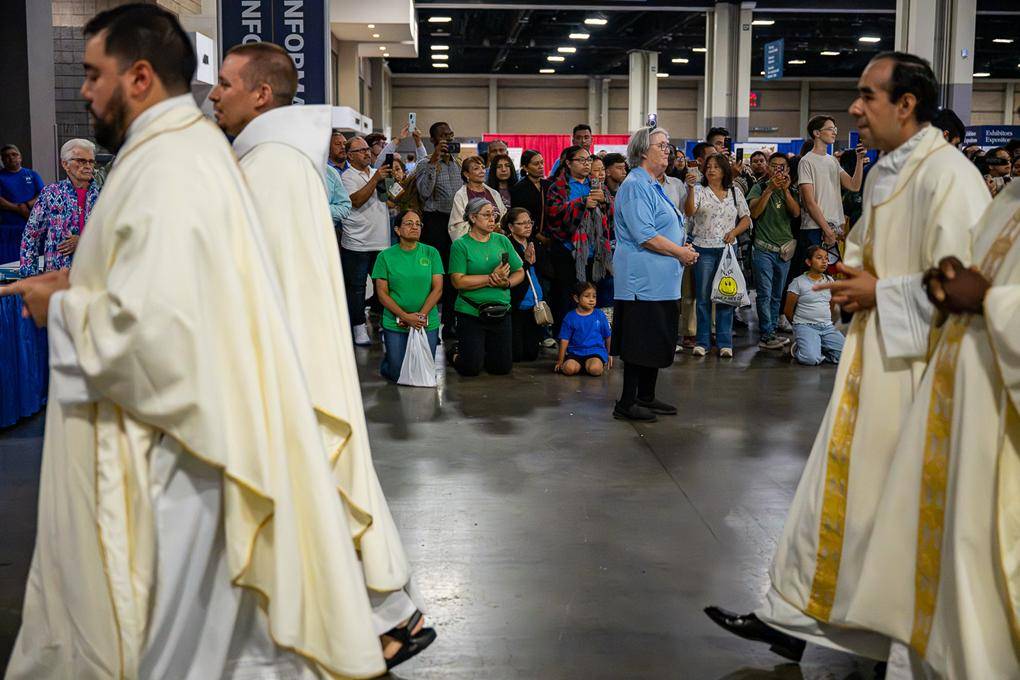
Her advocacy for programs and outreach have helped Spanish speakers find a home at many of the diocese’s 93 churches. More than half of the estimated 575,000 Catholics living in the diocese are Hispanic.
She’s now fluent in Spanish and a whiz on WhatsApp, a primary method of communication for Hispanics and others with family living around the world. She helped build the diocese’s network of 10 Hispanic
Coordinators, who are paid to serve in assigned areas called “vicariates” across the western half of the state.
“She is known in many areas as a no-nonsense nun. If she sees things not working the way they are supposed to, she will let you know,” Deacon Eduardo Bernal, the Hispanic Coordinator of the Mecklenburg area, said. “You can be the pastor, you could be the bishop, you could be the chancellor, you could be whoever. She will tell you how it is.”
At the same time, you might also find Sister Joan at a Hispanic retreat, attending a baptism, hitting a piñata during the Christmas Las Posadas celebration, or at a quinceañera party.
In her retirement, she will stay in North Carolina initially, visiting with friends and family and volunteering for the Church. Ultimately, she may return to the congregation’s motherhouse in Philadelphia but says her heart resides with the Hispanic population in the diocese.
“I am deeply grateful for the opportunity to accompany so many individuals, families, and parish communities over the years,” she wrote in her retirement letter. “Working alongside the Hispanic faithful – especially the poor, the immigrant, the marginalized, has been one of the greatest blessings of my life and has strengthened my religious vocation as a Sister of St. Joseph in countless ways.
“I am sincerely thankful to all with whom I have had the opportunity to serve. I have been blessed by the guidance and support of my many colleagues whose dedication to the Gospel has inspired me throughout my ministry. Together we have shared the responsibility and joy of building up the Kingdom of God, and just in general, have had a lot of fun and adventures!!
“My heart is full of gratitude and countless memories that I will treasure for the rest of my life.”
— Lisa M. Geraci. Liz Chandler contributed