

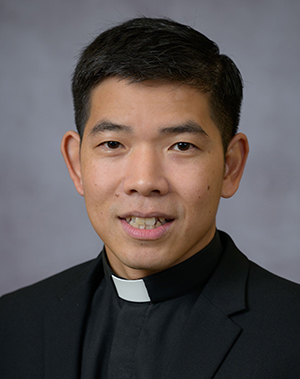
CHARLOTTE — Changes to Traditional Latin Mass offerings in the Diocese of Charlotte will take effect Oct. 2 to align with a deadline mandated by the Vatican – not July 8 as previously planned, Bishop Michael Martin announced Tuesday.
The new date allows more time for the transition and for renovation of a chapel designated for the Traditional Latin Mass (TLM) community, Bishop Martin said in an email to priests Tuesday.
The move is the final phase of the diocese’s gradual implementation of Pope Francis’ 2021 instruction, Traditionis Custodes, which prescribes limits on the Traditional Latin Mass in dioceses around the world but allows bishops to set up alternate worship sites.
The diocese is setting aside a chapel in Mooresville for celebration of the TLM, which averages approximately 1,100 regular attendees each week. They currently worship at four diocesan churches using the older form of the Mass, which uses prayers and a calendar predating the reforms of the Second Vatican Council.
The changes were set to take effect in conjunction with the diocese’s annual clergy assignments on July 8, which include the appointment of Father Brandon Jones as TLM chaplain.
On Tuesday, however, Bishop Martin accepted a request from the four parish priests that he wait until the Vatican’s deadline of Oct. 2 to implement the changes. The extra time will allow the pastors to accompany people through the transition and for renovations to the chapel to be completed, the bishop and the pastors agreed.
“It made sense to start these changes in July when dozens of our priests will be moving to their new parishes and other assignments,” Bishop Martin told the Catholic News Herald. “That said, I want to listen to the concerns of these parishioners and their priests, and I am willing to give them more time to absorb these changes.”
Extensive renovation work is already under way at the chapel in Mooresville, and diocesan construction officials said they expect it to be ready this October.
In the interim, Bishop Martin said, should the Vatican issue any official changes to Traditionis Custodes, the diocese would abide by those instructions. A June 24 meeting for TLM supporters at the new chapel site in Mooresville has also been postponed.
In 2023, in the wake of Pope Francis’ instruction, then-Bishop Peter Jugis ended TLM celebrations at five of the diocese’s nine parishes with small numbers of followers. Four larger congregations – St. Ann and St. Thomas Aquinas in Charlotte, St. John the Baptist in Tryon, and Our Lady of Grace in Greensboro – received a temporary extension from the Vatican’s Dicastery for Divine Worship and the Discipline of the Sacraments. That extension expires on Oct. 2, and Bishop Martin said the diocese will not seek a further extension.
TLM worship will be consolidated at the Mooresville chapel, with two Masses offered on Sundays and other holy days of obligation using the 1962 Roman Missal, and the option of adding another Sunday Mass if needed in the future.
The chapel, at 757 Oakridge Farm Hwy. in Mooresville, is strategically located between the diocese’s two largest population centers, Charlotte and the Triad. The diocesan-owned property includes a 5,000-square-foot church that seats 345 and a school/gym building. It is adjacent to Curlin Commons, the diocese’s affordable senior apartment community.
Renovations, overseen by the diocese’s Construction and Real Estate Office, include a new ceiling, flooring, lighting, sanctuary refitting, pews with kneelers, restroom installation, and full repainting. Once finished, the chapel will be consecrated and appropriately appointed for traditional liturgies.
The $700,000 renovation is being funded by the diocese.
— Patricia L. Guilfoyle
Published: 23 May 2025
MOORESVILLE — A new chapel is being designated for followers of the Traditional Latin Mass, marking the final phase of the Diocese of Charlotte’s implementation of rules issued by Pope Francis in 2021.
Bishop Michael Martin is designating the chapel as the new spiritual home for Traditional Latin Mass supporters who have been worshiping at churches in Charlotte, Greensboro and Tryon. This community follows the traditional form of the Mass, using prayers and a liturgical calendar that pre-date the reforms of the Second Vatican Council.
The yet-to-be-named chapel is located at 757 Oakridge Farm Hwy. in Mooresville, adjacent to Curlin Commons, the diocese’s affordable senior apartment community.
The diocese owns the property, which includes a 5,000-square-foot church that seats 345 worshipers and a separate school/gym building.
The diocese’s Construction and Real Estate Office is renovating the church building to serve as the new chapel, with upgrades including a new ceiling, flooring, lighting, refitting the sanctuary for Catholic worship, installing pews with kneelers, adding a second restroom, and repainting the entire space.
The $700,000 renovation is being fully funded by the diocese at no cost to the Traditional Latin Mass group, which according to diocesan officials numbers about 1,000 regular attendees among the diocese’s Catholic population of approximately 565,000.
The new chapel is part of changes announced May 23 by Bishop Martin to complete the diocese’s implementation of Pope Francis’ 2021 instruction that reintroduced limits on the Traditional Latin Mass in dioceses around the world.
“Traditionis Custodes” (“Guardians of the Tradition”) declared the liturgical books promulgated after the Second Vatican Council to be “the unique expression of the ‘lex orandi’ (law of worship) of the Roman Rite” and directed bishops not to establish new parishes or groups devoted to the old liturgy. While parish churches may not offer the Traditional Latin Mass, the instruction does allow bishops to “designate one or more locations where the faithful adherents of these groups may gather for the eucharistic celebration.”
In 2023, Bishop Peter Jugis called for “a smooth and orderly transition to the new course charted by Traditionis Custodes” to foster unity in the Church. Latin Masses at five parishes with smaller numbers of followers were discontinued, while four others with more participants – St. Ann and St. Thomas Aquinas in Charlotte, St. John the Baptist in Tryon, and Our Lady of Grace in Greensboro – were granted a temporary extension by the Vatican’s Dicastery for Divine Worship and the Discipline of the Sacraments. That extension expires this year.
Bishop Martin’s directive ends use of the Traditional Latin Mass at all parish churches effective July 8 and sets aside the Mooresville chapel for its celebration.
Bishop Martin said Mooresville was chosen for several key reasons. It lies between the diocese’s two largest population centers – Charlotte and the Triad region – making it geographically strategic. Additionally, because Traditionis Custodes restricts the celebration of the Traditional Latin Mass in parish churches, the diocese needed to find a suitable location not already designated as a parish. Mooresville was the only place where the diocese already owned an existing church building that met these criteria.
Since renovations will not be finished by July 8, diocesan staff are preparing the school building on the Mooresville property as a temporary worship space until the chapel is ready this fall. The property was the original site of Christ the King High School when it opened in 2011.
When the chapel is finished, diocesan officials said, it will be consecrated for Catholic worship and appropriately appointed for celebration of the Traditional Latin Mass.
Bishop Martin will also appoint a chaplain to serve the faithful and celebrate two Sunday Masses and Holy Day Masses using the 1962 Roman Missal at the chapel. If the chapel is not large enough to accommodate worshipers at two Masses each Sunday, an additional Mass could be considered at that location, Bishop Martin said.
The move to comply with Traditionis Custodes comes after numerous conversations with Traditional Latin Mass supporters and clergy who offer the old liturgy, as well as letters and emails from the laity, Bishop Martin said. Efforts to complete the implementation of Traditionis Custodes were begun earlier this year and shared with the diocese’s consultative bodies, he said.
In his letter announcing the changes, Bishop Martin wrote, “It is my heartfelt desire and prayer that this implementation of Traditionis Custodes will further ‘promote the concord and unity of the Church’ among the People of God in the Diocese of Charlotte so that, as Jesus prayed to His Father, we ‘may all be one’” (John 17:21).
— Patricia L. Guilfoyle
Bishop Michael Martin, OFM Conv. was ordained at St. Mark in Huntersville in front of a crowd of 1,700 one year ago.
CHARLOTTE — Bishop Michael Martin was on the job just four months when Tropical Storm Helene swept through North Carolina – killing 107 people, wiping out homes and jobs, and leaving more than half of the new bishop’s diocese declared a “disaster.”
Within hours, the diocese launched the largest humanitarian effort in its 52-year history. Within a week, the bishop was on the ground in some of the hardest hit areas, unloading supply trucks, praying with people, and looking for ways the Church could help.
At ground zero, in Swannanoa, he met with more than 100 parishioners on the front lawn of St. Margaret Mary Church – still without power and water – moving purposefully from family to family through the crowd as people wept, told their stories, and asked for his blessing.
“Bishop Martin touched our hearts,” says Claudia Graham, the parish’s business manager. “He was joining us in our sorrow and in our hope...He was genuinely concerned and he wanted us to know that we weren’t forgotten.”
The bishop’s rapid, in-person response illuminates a defining characteristic of his ministry – reaching people where they are and offering a public, heartfelt witness to faith.
“Helene was obviously a major moment in the life of our community, and I was moved by it, saddened by it and absolutely inspired by it,” Bishop Martin told the Catholic News Herald, reflecting on the outpouring of compassion after Helene, as the first anniversary of his episcopacy approaches on May 29.
“It’s really hard to think of my first year as bishop here without thinking about the hurricane, and wanting those who are still in various stages of rebuilding their lives to know that someone still cares about them, someone still loves them and someone is still working behind the scenes, along with a host of other people, to help them to get back some sense of normalcy in their lives.”
Margaret Beale, principal of Immaculata Catholic School in Hendersonville, will never forget Bishop Martin’s visit to the school a week after the storm, and the help he offered to people.
“Bishop Martin’s support as we recovered from the storm was felt by everyone,” Beale says. “Not only was he present, but he helped in any way he could…He was willing to do anything that was needed to help. It is apparent that Bishop Martin wants to be with the people, to minister to them and shepherd them.”
The bishop’s desire to “be with” the people is a constant refrain, evident from his first visit to the diocese on April 9, 2024. That’s when the Vatican announced “Father Mike,” a Conventual Franciscan from Baltimore and Atlanta, would become the fifth bishop of the Diocese of Charlotte. After Mass and a press conference with the retiring Bishop Peter Jugis, he prayed that day with people at a Catholic Charities food pantry, toured Charlotte Catholic High School, visited residents of Holy Angels in Belmont – then joined his brother priests for a special welcome dinner.
“Bishop Martin brings with him many gifts and a heart for the Gospel,” says Monsignor Patrick Winslow, who has helped him navigate his transition to the diocese. “I have been struck by his commitment, stamina and willingness to face challenges in service to the Church. Publicly and privately, it is evident that he is driven to help all people draw closer to Our Lord.”
A whirlwind of energy, Bishop Martin in his first year has visited 58 of 74 parishes across the diocese and 18 of the 20 Catholic schools, some more than once. He has performed more than 1,300 confirmations in 30 different parishes, and he’s participated in multiple events at the Catholic Conference Center in Hickory and Belmont Abbey College.
“We are blessed to have Bishop Michael, as I like to call him, leading the diocese,” says Benedictine Abbot Placid Solari, who leads Belmont Abbey and serves as chancellor of Belmont Abbey College. “It truly is a sacrifice for him to step away from his religious community, his brothers, to take on this role. I am grateful for the support he has given to us at the college.”
Bishop Martin has cultivated a close connection with the Catholic college, leading retreats and just this month receiving an honorary degree and celebrating its 2025 Baccalaureate Mass.
“I am impressed by his willingness to listen,” Abbot Placid said. “He’ll tell you what he thinks, but he also invites people offer their disagreement and counsel.”
The bishop’s first year also took him well beyond the diocese, from national meetings of the U.S. Conference of Catholic Bishops in Baltimore and Kentucky, to the National Eucharistic Congress in Indianapolis, to a pilgrimage in Mexico and two trips to Rome – one to attend “New Bishop School” and meet Pope Francis, and one to discuss business matters with Cardinal Robert Francis Prevost, who recently became pope.
In a signature moment last September, Bishop Martin engaged with more than 10,000 people of the diocese during the 2024 Eucharistic Congress. He walked in one of the nation’s largest Eucharistic processions, celebrated Mass and urged people to greater discipleship – a defining message of his ministry. The event bore hallmarks of his determination to attract more participants, from a shift in seating to revved up night-before programming aimed especially at young people. More enhancements suggested by the bishop are expected at this year’s Congress, Sept. 5-6.
“It’s been fantastic to see our shepherd making the rounds and connecting with his flock,” says Mary Catherine Surface, who co-chairs the Eucharistic Congress planning committee. “This bishop is really everywhere, and it’s inspiring to see the excitement of the people when he’s present.”
As a parent of four children in Catholic schools, she also appreciates the bishop’s willingness to speak out on behalf of Catholic education. And as a parishioner at St. Matthew, she vividly recalls his first major homily in the diocese, delivered to 4,000 people at an outdoor amphitheater just four days after he was installed as bishop, a special event organized by St. Matthew for the Feast of Corpus Christi.
“There were people I hadn’t seen in 15 years at that Mass, and I remember how many people fell to their knees as the Blessed Sacrament passed,” Surface recalls. “I feel that Bishop Martin really kind of began his ministry in the diocese at that Mass. He seems to have such an evangelical heart.”
Bishop Martin relishes the moments he spends with regular people, he says. Parishioners say they’re charmed by his homilies laced with humor and depth, even though he consistently leaves them feeling challenged and unsettled as he calls them to deepen their faith – and always to serve as disciples spreading the Good News.
His approach stands out for Father Pat Cahill, pastor of St. Eugene Parish in Asheville, where Bishop Martin celebrated confirmation just three weeks after Helene.
“The day he arrived we got our power and running water back, and I remember he suggested in a very pastoral way that it happened just in time for his first visit to our parish,” Father Cahill says. “It was a very welcome and lighthearted moment and something we really appreciated among all the difficulty and devastation that was going on.”
Bishop Martin’s willingness to address the needs of the diocese and bring a Gospel perspective to current issues has also been important, says Mercy Sister Rose Marie Tresp. In February, the bishop spoke at a conference held on the Sisters of Mercy campus in Belmont, and she recalls the care he took in answering questions from attendees.
Addressing the needs of the poor and marginalized has been a regular theme in his homilies, she says. She saved an Oct. 18 commentary he wrote in the Catholic News Herald titled, “Are we ready to walk with those in need?”
“This article, which I still have, is emblematic of the impact that the bishop has made in this diocese,” she says. “Bishop Martin sees individuals both in person and in his heart.”
Father Julio Dominguez, vicar for the diocese Hispanic Ministry Office, appreciates Bishop Martin’s advocacy for immigrants and for the poor. Earlier this year, he sent a message of hope to immigrants: “Regardless of status, Catholics stand with you,” and then joined Raleigh Bishop Luis Zarama in a joint statement emphasizing the need to protect immigrants’ human rights while respecting laws and borders.
“I am grateful to our bishop for his openness to immigrants,” he says. “I have seen his great concern that immigrants have representation and attention in the diocesan offices. He has asked to see how we can encourage more young Latinos to enter the seminary, as well as how to encourage parents to consider Catholic education for their children. I think this shows a great pastoral interest in them.”
For Bishop Martin, it has been a year of discovery, from the busy streets of Charlotte to the cities and towns of the Triad region and communities large and small in the mountains – all places he says he’s found faith in abundance.
“God’s grace is never limited,” Bishop Martin says. “You don’t need to be in the big city in order for God to move mountains in your life.”
He has worked hard to support diocesan priests and nurture the future of the priesthood in western North Carolina, continuing the work of his four predecessors. He ordained seven new diocesan priests in his first year. He’s built relationships with seminarians studying at St. Joseph College Seminary in Mount Holly, Mount St. Mary’s Seminary in Cincinnati and at the Pontifical North American College in Rome, a role he finds moving.
“It’s the first time in my ministerial life where there are young men who look to me for spiritual fatherhood.” he says. And then there was the priestly basketball showdown, where the bishop served as referee, zebra stripes and all.
Notes Father Benjamin Roberts, pastor of Our Lady of Lourdes in Monroe and chairman of the diocese’s Presbyteral Council, which represents priests: “I’ve been amazed at his consultation with other priests and at his patience and willingness to hear all points of view. He’s also a great preacher. He certainly has his own style and it’s effective. He leaves you feeling challenged. And it takes a lot of time and energy to sustain that.”
With more than 30 years’ experience in Catholic education, Bishop Martin has especially found joy in his visits to the diocese’s Catholic schools, where he’s playful and inspiring as he interacts with students in classrooms, cafeterias and gyms. He happily recalls precious moments shared with students playing pickleball, joining in art projects and trying out a flight simulator. He even led a game of “Parting the Red Sea” in the bleachers at a Charlotte Catholic basketball game, a video of which was a hit on social media.
School visits have brought a special collection of student art projects and crafts gifted to him, which he keeps in a room at his Charlotte home, with a few displayed on the fridge. Just a page from a coloring book, he says, “you know, God speaks through that.”
The year has not been without challenges, from maintaining a packed daily schedule to replying to everyone who reaches out to him. Perhaps most difficult, he says, has been learning to live alone after spending his entire adult life living in community with other Franciscan friars.
“That has been a hard challenge, especially praying by myself when I’ve spent more than 40 years praying every day with other friars,” he says. “My circumstances are new and so I’ve had to learn to adapt to that.”
That sacrifice pains Abbot Placid, who lives in community with his fellow Benedictine monks and can only imagine the feelings of loss such a move would bring. He’s noticed that Bishop Martin is working hard to foster community among priests of the diocese, consistently calling for unity.
As the diocese’s ecumenical officer, Father Roberts – a Lutheran convert to Catholicism – appreciates the bishop’s penchant for embracing all people. “We should all be one body in Christ,” he says. “Unity is near and dear to the bishop’s heart.”
The bishop also seeks out opportunities to offer Mass at parishes to get closer to the people and priests of the diocese, and he makes regular trips to Baltimore to see his mother, Beverly.
Moving into his second year, Bishop Martin wants to motivate the more than 530,000 Catholics in the diocese to embrace his motto “Duc in Altum,” Latin for “Put Out Into the Deep.”
“One of the great challenges is helping people to realize that faith not shared is faith that’s dead,” he says.
One way he is doing so is by working on a vision for the diocese that he will present later this fall. Already among his priorities:
He’ll also seek to carefully listen to the Holy Spirit, he says, and use the influence of his position for good: “I take joy in knowing that if I stay connected with the Lord and with the Church as a whole, I can use the position I’ve been given to really make a difference.”
— Christina Lee Knauss. Liz Chandler contributed. File photos
This is not what I wanted!
It has been a year since I received a call from Bishop Michael Martin asking me to serve as his priest secretary, and in one sentence I can say that I am happy where I am because this is where God wants me to be.
Before I was asked to serve in this position, I would have never thought of myself as a secretary for a bishop. This is not what I wanted. Yet this is what God wanted for me, and for that I am forever grateful. I am convinced that God’s ways and guidance in my life are much better than anything I would have chosen. God knows what is best for me and my salvation, whereas I tend to judge by my own poor experience and my personal desires.
I have been blessed to see how excited people get when Bishop Martin comes to their parish. The reactions vary. Our Hispanic parishioners tend to be more expressive, and most want to take a picture with the bishop. Our Vietnamese congregations love giving him flowers and food. The Anglo community is a bit more formal and takes the opportunity to present letters or personal gifts.
I have seen people cry when they hear Bishop Martin’s message of hope and witness the care he demonstrates. I saw that most prominently when we were traveling to areas impacted by Tropical Storm Helene. He jumped in to help deliver supplies and listen to and comfort those who had just lost everything. I also believe that the presence of the bishop inspires and challenges many to follow Christ in a more personal way.
In my journey with our bishop, one of the most-asked questions I get is: What is it like to work with him every day? It is certainly not my average day at a parish, school or campus ministry. Some days are long and tiring, others are much more relaxed, but there are never two days that are the same.
There is a certain trust that we both have to have in each other. In the beginning I was nervous and was trying to figure things out for each new activity that we attended. I believe that over time we have learned how to better communicate with each other and what the needs of each situation will be. Learning to read his gestures, facial expressions and body language makes me feel, at times, like a secret agent.
One of the best parts of my ministry has been getting to know my brother priests in a more personal way. The other is getting to know the diocese and its communities on a whole new level and from a deeper perspective – learning about the geography, the needs of parishioners, the complexity of communication and even the complaints. But the best of all is receiving the love and support of all people of good faith throughout our diocese.
I can’t help but feel like Barnabas or Silas must have felt accompanying St. Paul on his journeys to visit the early Christian communities. They were not the protagonist, but simply a spiritual, emotional and personal support to their beloved companion. I also like to think that, like St. Paul, I am learning to be content with all situations in life (Philippians 4:11-13).
There is still so much more to learn, but I feel confident that God will give me what it takes to continue my ministry in the best way possible.
Father Juan Miguel Sánchez is priest secretary to Bishop Michael Martin.