

‘An expression of God’s love’
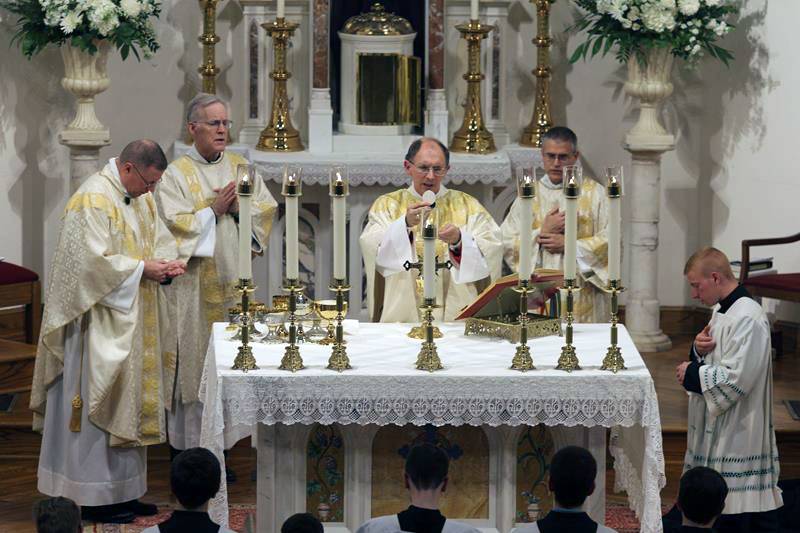
 CHARLOTTE — The Last Supper is an expression of God’s love, Bishop Peter Jugis preached on Holy Thursday at St. Patrick Cathedral.
Addressing a cathedral full of worshipers on the first day of the Triduum April 18, Bishop Jugis explained the significance of the Holy Thursday liturgy.
“We are commemorating today, the institution of the Holy Sacrifice of the Mass,” he said. “The Mass of the Lord’s Supper every year is the anniversary or the celebration of the birthday of the Holy Sacrifice of the Mass. It’s also the celebration of the anniversary of the institution of the sacred priesthood.”
Bishop Jugis noted that the sacred Triduum “all began with the Last Supper which Jesus celebrated the night before He died. So also, the night before the celebration of the Lord’s Passion and His crucifixion and death, we gather to honor the institution of these two great sacraments of the Church.”
During this time of the Easter Triduum, Bishop Jugis reminded the faithful that the Church is commemorating the Lord’s offering of Himself for the salvation of the world.
“He is the sinless, spotless Lamb of God who is sacrificed for the forgiveness of sins,” Bishop Jugis said.
He recalled the words of St. John’s Gospel (13:1-15), “Jesus loved His own in the world and He loved them to the end.”
Bishop Jugis noted that during Christ’s whole public life, every word that He spoke, every miracle that He performed, every act was always an expression of God’s love.
“Jesus is the love of God that He brought to earth,” he said.
So, too, the Last Supper and the institution of the Eucharist and the Mass are an expression of God’s love for humanity, he said. The institution of the sacred priesthood to continue the sacrifice, the one sacrifice of Christ through time, is another expression of love, he continued.
“He loved everyone until the very end and everything is an expression of that love of His."
He also reminded those gathered that lest we think that we are just commemorating a past event, we should remember that Jesus instituted the Eucharist as the living memorial of His Passion, crucifixion, death and resurrection.
“It is not just a past event,” Bishop Jugis said. It "is an event that is present here now due to Jesus’ own design, His own plan … to make the work of Calvary present here now in the sacrifice of the Mass.
“Christ is saving us now at this Mass because He has extended forward in time to sacrifice by means of the Mass. Salvation is happening now … it all began at the Last Supper.”
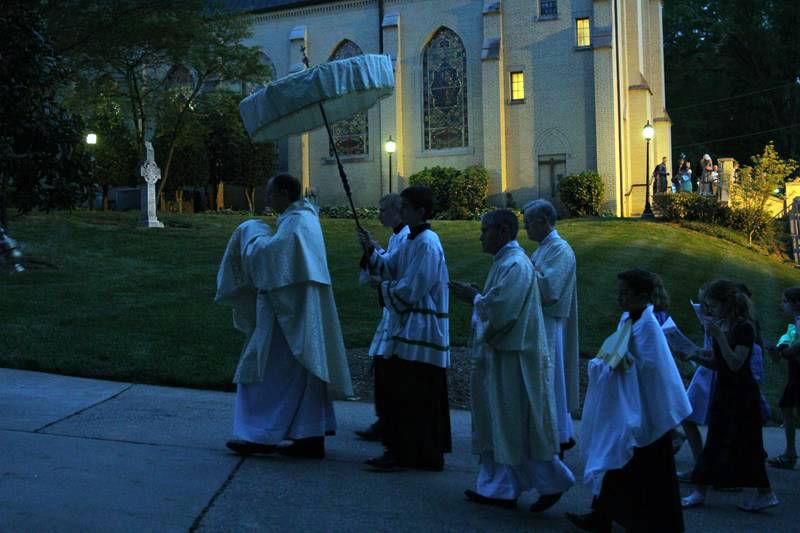
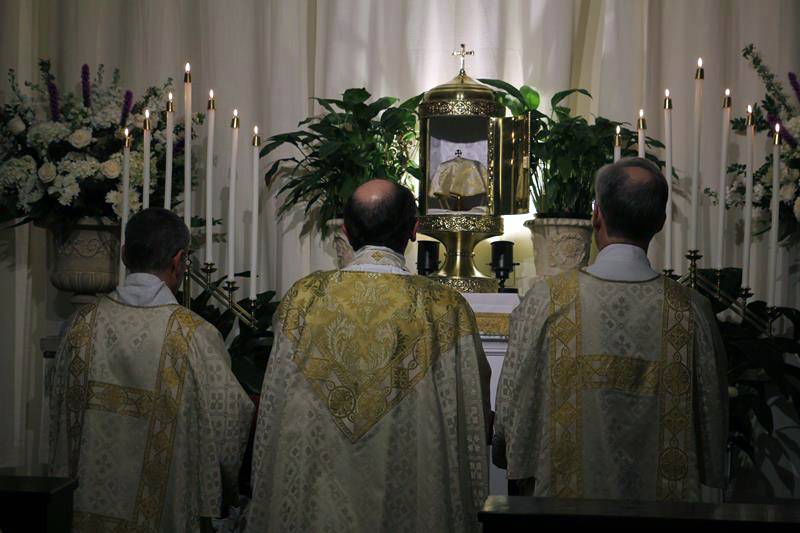
At the conclusion of Mass, Bishop Jugis processed with the Eucharist contained in a shrouded ciborium around the cathedral, and then outside around the cathedral grounds to a Chapel of Repose in the cathedral’s Family Life Center.
Dozens of parishioners filed in behind him to spend some time in prayer, taking as their example the night Jesus spent praying in the Garden of Gethsemane when He asked His disciples, "Could you not keep watch with Me for one hour?"
At the end of the Holy Thursday liturgy, altars in every Catholic church were stripped bare – outwardly demonstrating the sense of the Church's bereavement during the time of Christ's Passion and burial.
On Good Friday, no Mass is celebrated.
— SueAnn Howell, senior reporter
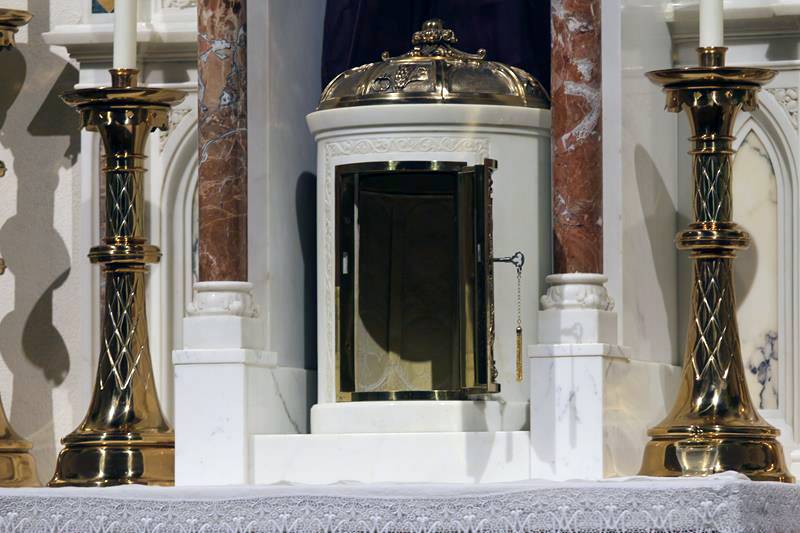
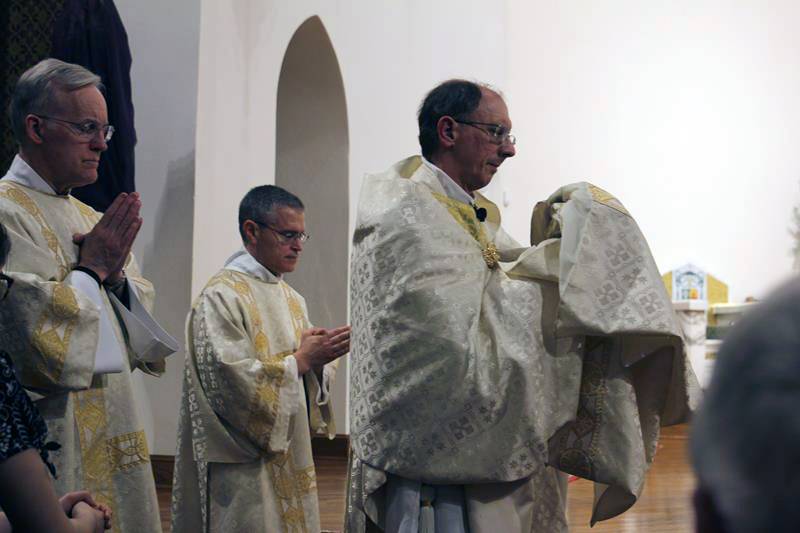
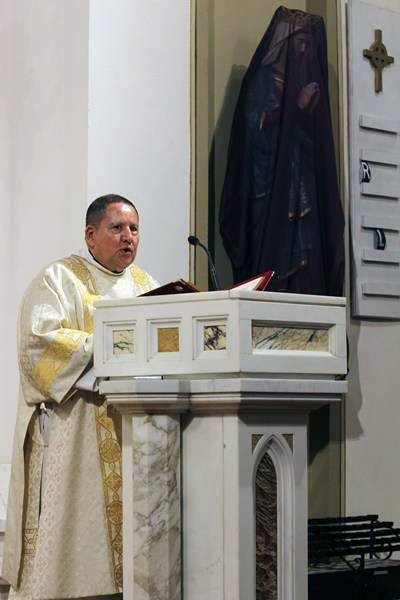
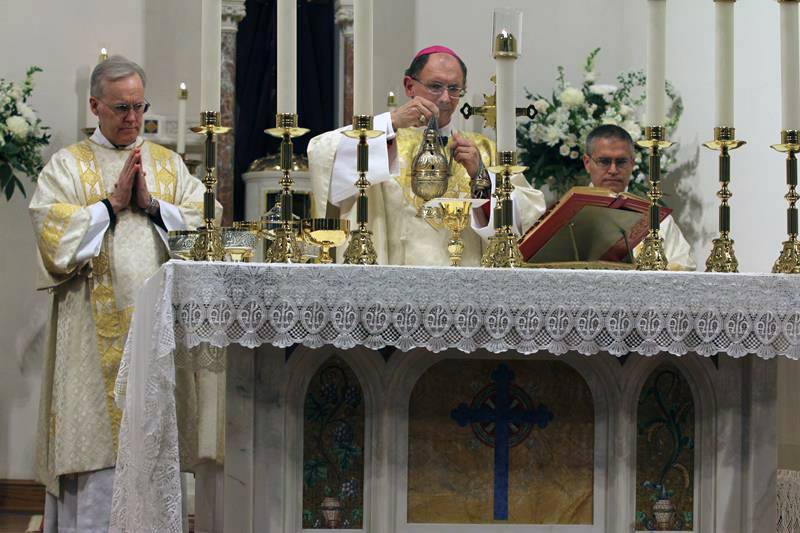


More sights of Holy Thursday
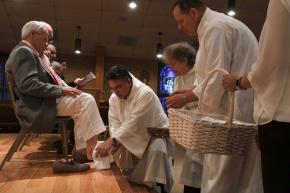 Show Gallery The Seven Churches Visitation, a Lenten tradition to visit seven churches on Holy Thursday, gives Catholics the opportunity to recall the seven stops of Jesus Christ along the Via Dolorosa. Consider trying some or all of this pilgrimage yourself.
Also known as “Visita Iglesia,” the visitation to seven churches on the evening of Holy Thursday dates back to the 16th century, originating in Rome with St. Philip Neri. The pilgrimage encompasses the seven Roman basilicas: St. John Lateran, St. Peter’s, St. Mary Major, St. Paul-Outside-the-Walls, St. Sebastian, Santa Croce-in-Jerusalem and St. Lawrence-Outside-the-Walls.
Following the Mass of the Lord’s Supper on Thursday evening, the Blessed Sacrament is reserved on an Altar of Repose for Adoration. During the pilgrimage, the faithful visit several churches – sometimes seven, or whatever number is possible – to pray before the Blessed Sacrament in each church, remembering Our Lord’s words to His disciples in the Garden of Gethsemane to keep watch with Him for one hour.
Latin Mass held on Holy Thursday
CHARLOTTE —The Charlotte Latin Mass Community marked the beginning of the Easter Triduum with a Solemn High Mass in the Extraordinary Form at Charlotte Catholic High School on Holy Thursday April 18.
The Mass, sponsored by St. Ann parish, was offered by Father Jason Barone, chaplain of Charlotte Catholic High School who was assisted by Fr. Matthew Kauth, rector of St. Joseph College Seminary as deacon and seminarian Harry Ohlhaut serving as subdeacon.
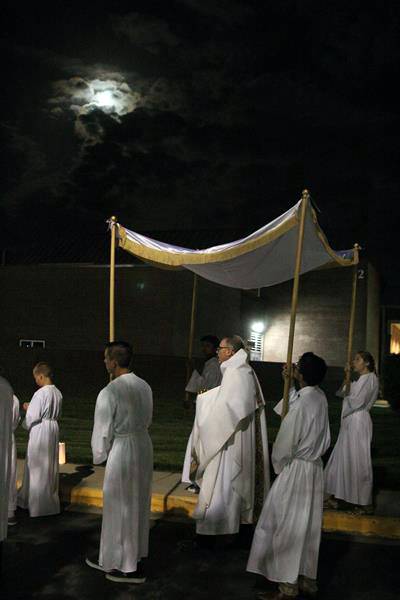
The ancient Mass, which was attended by over 130 faithful, concluded with procession to the Altar of Repose, and prior to the stripping of the altars, the priests and seminarians chanted Vespers.
During the evening, many visitors came to offer prayers at the Altar of Repose as part of the seven churches pilgrimage tour.
St. Ann will again offer Latin Triduum liturgies for Good Friday and Easter Vigil. For more information on the Latin Mass, please contact Chris Lauer at This email address is being protected from spambots. You need JavaScript enabled to view it. or visit: www.charlottelatinmass.org
— Provided by Mike FitzGerald
GREENSBORO — An Coimisiún le Rincí Gaelacha, the world’s premiere Irish dance organization, will host the 49th annual World Irish Dancing Championships at the Koury Convention Center April 14-21.
The world championships, called “Oireachtas Rince na Cruinne” in Gaelic, is the Olympics of Irish dance – a prestigious event where elite dancers from every corner of the globe will converge on Greensboro and battle it out to become “Champions of the World.”
This is the first time that this event has been hosted in the Southern Region and only the third time the event has taken place in North America. As the largest and most prestigious Irish dancing contest globally, which has run for nearly five decades, “The Worlds” is coming to Greensboro after the city fought off stiff competition from venues worldwide.
The world championships are expected to attract in excess of 5,000 competitors in solo, céilí, figure-choreography and dance drama categories in a variety of age groups.
Aged from eight to 30, competitors will travel to Greensboro for the event from more than 27 countries including Ireland, England, Scotland, France, Russia, South Africa, Argentina, Brazil, Japan, Australia and Canada. An estimated 25,000 spectators, comprised of friends, family, teachers and supporters, are also expected. In all, the competition figures to boost the city’s economy by around $20 million.
Catholics throughout the Greensboro area, including St. Leo the Great Parish and the Ancient Order of Hibernians, are supporting the international event in various ways.
This year’s championships in Greensboro will be a truly vibrant festival, presenting the best in Irish dancing. Through nine days of intense competition, former champions will defend titles and new champions will be crowned. Ancillary events such as music and Irish language sessions, social events for dancers and the World Ball, are also being organized.
Entry to the competition will be strictly controlled using a wristband system, but North Carolina residents and any military personnel can obtain a free wristband each day during the competition at the Oireachtas welcome desk, located in the foyer of the Sheraton Hotel. Photo identification will be required for each wristband issued. Wristbands for the following day will be available between 4 and 6 p.m. each afternoon.
See breathtaking displays of talent from the world’s most skilled dancers, who have worked relentlessly for the past year to ensure they bring their very best to North Carolina. The traditional aspects of Irish step dance will fuse with increasing athleticism, innovation in choreography and rhythm to demonstrate a modern and truly inspiring evolution of this cultural dance form.
Dancers as young as 10 years old must perform three dances (in both soft and hard shoes) in front of three rotating panels of seven international adjudicators. This year, because of a significant increase in participant numbers, we are introducing a double recall and all but the two youngest age groups will perform over two days in a system involving heats, semi-finals and a final round. Teams are made up of eight or 16 members, and they dance traditional “céilí” or figure dances with precision and synchronization.
Musical accompaniment for the event will be provided by teams of experienced Feis musicians from all around the world
The honoree for this year’s event is Mary Lou Schade, who has made an outstanding contribution to Irish Dancing in North America and throughout the world.
— Catholic News Herald